Polis Paper N° 25 – Brücken zwischen IST und SOLL – Kritik und Empfehlungen für Deutschlands Digitalstrategie aus feministisch-intersektionaler Perspektive

Im August 2022 veröffentlichte die deutsche Bundesregierung ihre ressortübergreifende Digitalstrategie mit dem Versprechen, Ungerechtigkeiten im digitalen Zeitalter anzugehen. Ein Jahr später fehlt es an konkreten Fortschritten, die festgehaltenen Maßnahmen bleiben unzureichend. Wie können wir die digitale Zukunft gerechter und nachhaltiger gestalten? Dieses Paper betrachtet die Strategie aus einer feministisch-intersektionalen Perspektive, identifiziert die inhaltlichen Schwächen und … Weiterlesen …

Polis Paper N° 23 – Below its potential – Navigating the complexity of Feminist Foreign Policy

By Sophie Domres & Lena Wittenfeld 10.10.2023 While Feminist Foreign Policy (FFP) as a normative foreign policy approach gains global traction, its application often remains superficial, leading to varied interpretations, limited impact and various tensions. This paper comprehensively unveils the discourses surrounding FFP, highlighting its (in)consistent yet transformative potential. We initially argue that FFP’s shift … Weiterlesen …

Shamayel Shalizi: „Not being able to go home is one of the worst pains on earth“

A few days before our Polis-Teatime Lights out in Afghanistan: Which options for Afghan artists?, Polis member Claire Saillour met with Shamayel Shalizi (designer, multimedia artist, founder of the platform Blingistan), who is trying to build bridges between the Afghan diaspora and people in Afghanistan with formats such as “Diaspora passing”. She asked her how she is experiencing the changes in her home country Afghanistan and how it affects her personally.

An conversation between Shamayel Shalizi and Claire Saillour

Weiterlesen …

Angela Merkels feministisches Erbe? Weg vom außenpolitischen Status quo nach der Bundestagswahl

Im September 2021 endet nach 16 Jahren die Ära Merkel. Angela Merkel war nicht nur die erste Ostdeutsche und die erste Naturwissenschaftlerin, sondern auch die erste Frau im Bundeskanzler*innenamt. Was bedeutet es für die deutsche Außenpolitik, dass mit ihr eine Frau Bundeskanzlerin war? Hinterlässt sie vielleicht sogar ein feministisches Erbe? Und was sollte der*die nächste Kanzler*in tun?

Ein Kommentar von Maike Laengenfelder und Karoline Färber

Weiterlesen …

Mexico’s 2021 midterm elections: Between Feminist Foreign Policy and domestic gender inequalities

Known for its very high rates of violence against women (the number of femicides has been rising dramatically for years), Mexico yet attracts attention at the international level for its strong commtiment to gender equality, especially by adopting a Feminist Foreign Policy in 2020. We want to take stock of the situation and examine how the country’s Feminist Foreign Policy aligns with the domestic situation.

A Comment by Joanna Bedersdorfer, Sophie Domres and Helena Lüer

Weiterlesen …

Reproductive health beyond the protests: Quo vadis, Europe?

In part one we wrote about the ongoing demonstrations against new restrictions on reproductive rights in Poland. We looked at the historical development, the influence of the Catholic Church and the chances of the current protests. Now, we want to contextualise the restrictions in Poland through commenting on the European responses to limitations to reproductive rights.

A Comment by Veronika Datzer and Nathalie Kornet

Weiterlesen …

„Moja macica to nie kaplica – meine Gebärmutter ist keine Kapelle“

Das steht auf den Schildern einiger Demonstrierender, die zurzeit auf Polens Straßen ziehen und gegen die jüngsten Verschärfungen des Abtreibungsgesetzes demonstrieren. Immer mehr entwickeln sich die Proteste über ihr feministisches Ausgangsziel hinaus und nehmen die PiS-Regierung und die mächtige katholische Kirche ins Visier. Mit Erfolg? 

Ein Beitrag von Rebekka Pflug und Leonie Hopgood

Weiterlesen …

Participation for future: Youth in party politics in Germany, Georgia and beyond

Party politics is losing touch with civil society, most prominently youth. During the past months, we have discussed actions to include young people and their diverse positions on contemporary issues in politics with youth and young experts in Georgia and Germany. It has become clear that new forms of interaction between these increasingly disconnected groups are needed – and that the time is now!

A Comment by Frauke Seebass and Anna Kiknadze

Weiterlesen …

Frauen, Frieden und Sicherheit im Nahostkonflikt: intersektional denken!

Der Nahostkonflikt scheint unlösbar – nicht erst seit US-Präsident Trumps „Deal of the Century oder den Annexionsplänen der israelischen Regierung von Teilen der Westbank. Zum 20. Jubiläum der Resolution 1325 des UN-Sicherheitsrats machen wir Vorschläge für eine intersektionale Konfliktbearbeitung, die die Verschränkung verschiedener Diskriminierungsformen in den Blick nimmt. Auch Deutschland kann hier aktiver werden.

Ein Beitrag von Alina Zurmühlen und Dilek Gürsel

Weiterlesen …

“The moment we decide to fulfil something, we can do anything*”

Political parties in Georgia mostly fail to include young people in their work, while youth often distrust party politics and rarely organise in institutionalised forms of activism. #GEOYOUTH2020 looks at the causes of their absence from party politics and aims at making young voices heard in the run-up to the 2020 parliamentary elections.

An Analysis by Sonja Schiffers & Frauke Seebass

Weiterlesen …

Ohne sozialen Austausch und Kooperation keine Demokratie

Seit einigen Jahren ist eine Polarisierung von Parteiensystemen zu beobachten. Ein möglicher Grund für die Abgrenzung der Parteien voneinander ist die soziale Isolation der Wählenden in ihren gesellschaftlichen Gruppen. Für eine zusammenhaltende Gesellschaft müssen deshalb Anreize zum Austausch in der Bevölkerung und Räume für Kooperation gestärkt werden.

Ein Kommentar von Jan Osenberg

Weiterlesen …

No country for old men: Die Europawahl 2019 in Zahlen

Die diesjährige Europawahl stand ganz im Zeichen der Klimakrise und junger Menschen, die zu zehntausenden auf die Straße gingen. Doch wo haben die WählerInnen in Deutschland letztlich ihr Kreuz gemacht? Und zeigt sich der Protest junger Menschen auch an der Wahlurne? Der Bundeswahlleiter hat zu diesen Fragen nun die Daten geliefert.

Ein Kommentar von Christoph Abels mit Grafiken des Einfachen Dienstes

Weiterlesen …

Diagnosis: Polarisation? Call for Polis Blog articles #EP2019

The 2019 European Parliament elections led to a further erosion of political power of the former catch-all parties and indicate an increasing political polarisation in Europe. Let’s have a closer look: are we in fact becoming more polarised? If so, what are potential consequences and what can be done about it? If not, how can we describe the phenomenon better? 

It’s your turn to shape the debate!

Weiterlesen …

What about the patriarch? Church, society & sexual minority rights in Georgia

The Georgian clergy is bound to play a crucial role in the country’s European integration process. Back in 2013, violent protests against an LGBTIQ* rights rally in Tbilisi revealed the destructive approach of religious groups towards civil liberties. With regard to Tbilisi’s first queer pride this June, constructive dialogue seems inevitable in order to move Georgia’s society forward.

A Comment by Simon Schultz

Weiterlesen …

When women take up arms and what that means for DDR processes

Female combatants are a reality in nearly every armed conflict today. If we want to design sustainable post-conflict policies, especially in the area of disarmament, demobilisation and reintegration (DDR), we need to make them visible – to understand the different factors that draw both women and men towards violence.

A Comment by Britta Gade

Weiterlesen …

Midterm Elections 2018: Die Ergebnisse exklusiv zusammengefasst

Die US-Zwischenwahlen wurden dieses Jahr mit großer Spannung erwartet. Im Vorfeld sorgte der “left push” der Demokraten, das Antreten einer großen Anzahl weiblicher und nicht-weißer KandidatInnen, sowie eine mögliche Abrechnung mit der Präsidentschaft Trumps für Diskussionen.

Ein Beitrag von Esther Kern, Felix Stoßmeister und Laura Menzel

Weiterlesen …

Weshalb im November 2018 die wichtigsten US-Zwischenwahlen seit Jahrzehnten anstehen

Bei den diesjährigen Midterm Elections geht es nicht nur um das politische Programm des Präsidenten und seiner Partei, sondern angesichts der „disruptiven“ Präsidentschaft Donald Trumps auch grundsätzlich um den Zustand der US-Demokratie. Für die EU wird sich wiederum zeigen, wie nachhaltig die jüngsten Verwerfungen im transatlantischen Verhältnis tatsächlich sein werden.  

Ein Beitrag von Florian Gawehns

Weiterlesen …

Allez l’Europe! Polis180 startet deutsch-französische Zukunftswerkstatt

Im Juni veranstalten wir eine Workshopreihe zur Zukunft der deutsch-französischen Beziehungen in und für Europa. Im Rahmen von sechs Workshops in Berlin, Paris und Frankfurt werden junge deutsche und französische EuropäerInnen eingeladen, gemeinsam über die Herausforderungen Europas zu diskutieren, Lösungsvorschläge zu entwickeln und auszutesten.

Ein Beitrag von Claire Saillour

Weiterlesen …

Why Armenians Call for a Velvet Revolution

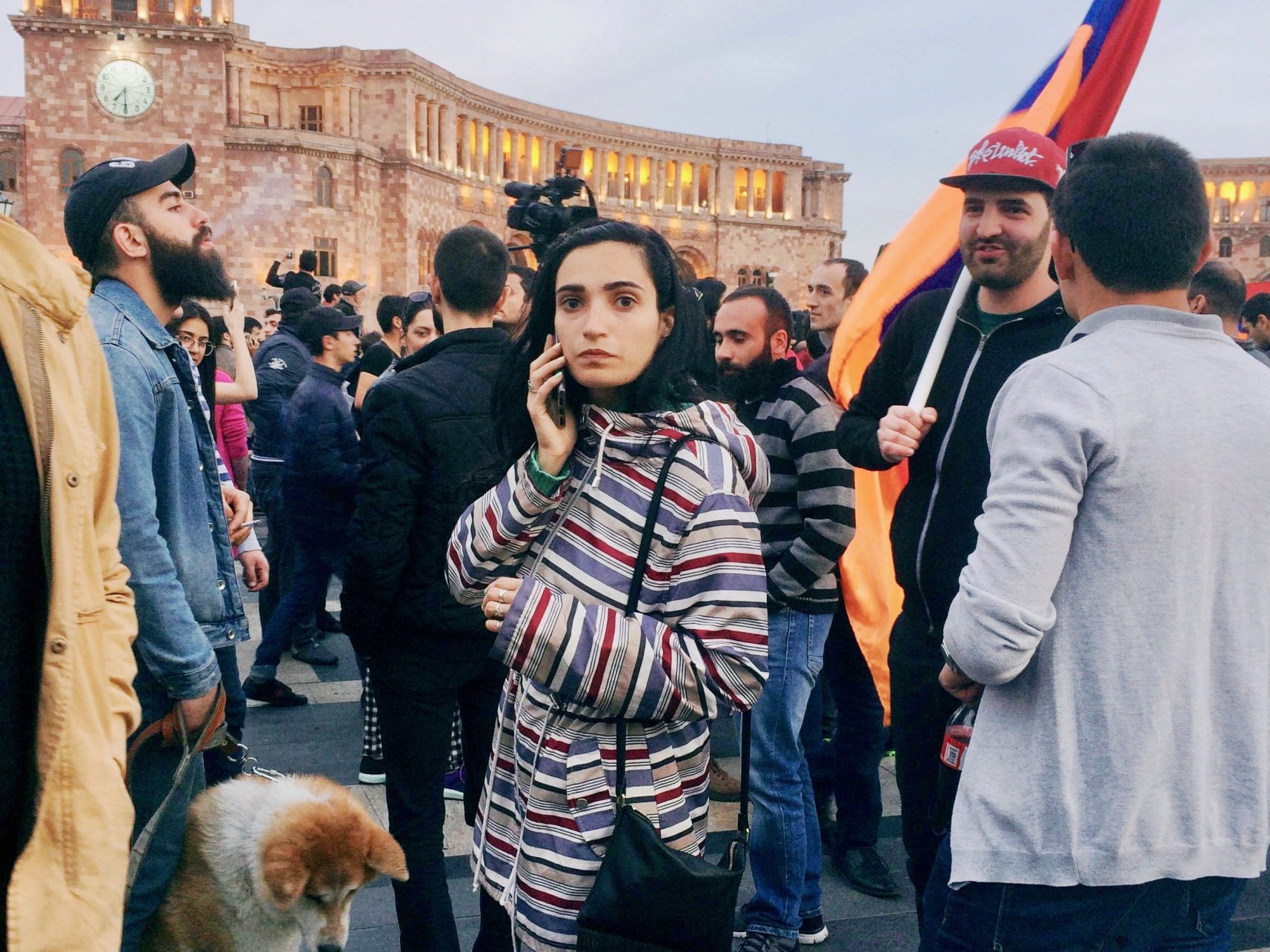
For almost a week now, huge rallies have shaken the Armenian capital of Yerevan, where Nikol Pashinyan, one of the leaders of the movement, called for a “velvet revolution”. But will the protesters this time successfully press for democratic accountability?

An Interview with Olya Azatyan and Sonja Schiffers

Weiterlesen …

Super Election Year in Latin America: Peace, Polls & Populism

2018 marks a decisive year for Latin America with six presidential elections that will reshape the political landscape for the foreseeable future. As the continent shifts to the right and female political leaders depart, the backlash against gender equality and LGBTQ rights becomes inevitable.

A Comment by Lena Riemer

Weiterlesen …

The Colombian Transformation Process: Why Gender is Key

The end of the Colombian civil war in 2016 and the transformation of the FARC guerrilla into a political party has been met with international praise, especially with regards to the inclusive process focusing on women’s perspectives. While their role is crucial, consequent political events threaten to put this ambitious project in jeopardy.

A Comment by Frauke Seebass

Weiterlesen …

Talking Think Tanks and Beyond

What think tanks across the world do is analyse, discuss and inform policy. At the same time, they face many, in some respects increasing, challenges to their core activities. So how should think tanks adapt to a changing world? In which areas is improvement indispensable? And why are think tank directors usually male?

An Interview with Enrique Mendizabal and Sonja Schiffers

Weiterlesen …

Foreign Policy Review: Polis180 kommentiert neuen Koalitionsvertrag

Bisher hat sich die junge Generation noch nicht öffentlich zu den außenpolitischen Zielen der (möglichen) Großen Koalition geäußert. Dabei bestimmen die Entscheidungen von heute die Realität der Jugend von morgen. Polis180 hat den neuen Koalitionsvertrag mal genauer unter die Lupe genommen und die Vereinbarungen in Sachen Außenpolitik fleißig analysiert.

Politische Statements von Polis-Mitgliedern

Weiterlesen …

Civil Society Can Do More Than Promote Gender Equality

After Germany held the G20 presidency in 2017, it is now on Argentina to promote female empowerment and civil society engagement. Last December, during the 11th WTO Ministerial meeting, numerous civil society experts were blocked from entering the country. Thus, it remains to be seen how Argentina’s G20 presidency will deal with the fundamental role of civil society.

An Interview with Barbara Fürst, Charlotte Becker and Miriam Meier

Weiterlesen …

How Women in Tech Fight for Development and Good Governance

Georgia has undergone major political and economic reforms since the 2003 Rose Revolution. After years of rapid transformation, the recent decrease in speed seems only natural. Still, many problems are left to tackle. At this stage, donors and investors should keep a close eye on young, tech-savvy social entrepreneurs, whose engagement can inspire change in Georgia and abroad.

A Comment by Sonja Schiffers

Weiterlesen …

The Role of Female Entrepreneurship in a Globalised Economy

From small and medium enterprises to booming giants: the Business 20 forum brings international businesses, organisations and NGOs together for the purpose of sharing perspectives and experiences on finance, trade, healthcare and digitalisation. Polis180 asked a representative of the B20 about the opportunities and challenges of making our economy more gender-inclusive.

An Interview with Dr. Stormy-Annika Mildner and Lea Spörcke

Weiterlesen …