New political perspectives for Taiwan after the COVID-19 Pandemic

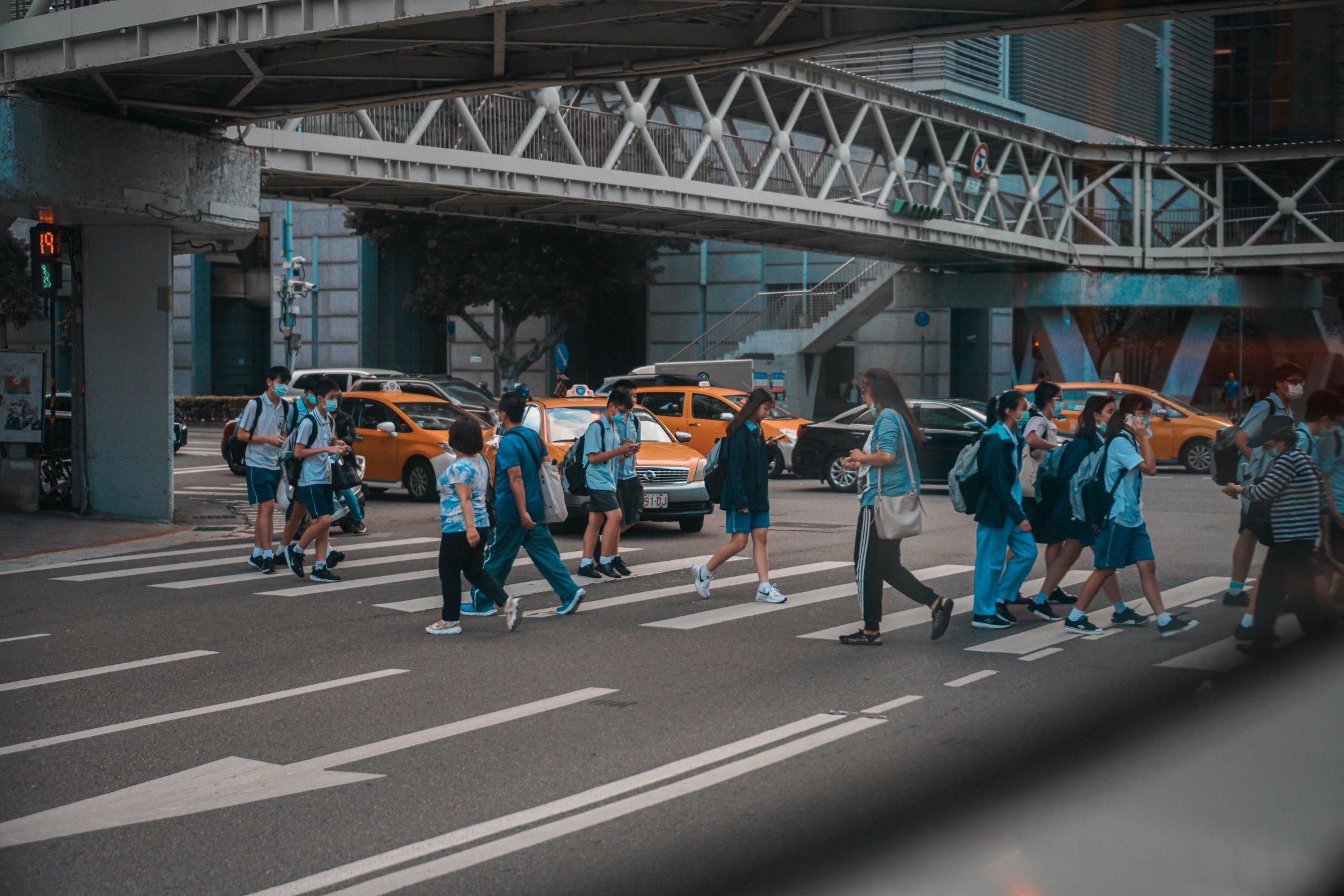
For decades, Taiwan has been struggling for international recognition, becoming increasingly isolated politically. Yet its widely praised management of the COVID-19 crisis may have opened new doors for diplomatic ties. A year into the pandemic, we take a look at the background of Taiwan’s current international standing, and how new bilateral cooperation initiatives might lead to more political support for its independence.

A Comment by Sophie Bisping

Weiterlesen …

Ghosn, the Taylors and the Japanese criminal justice system

In addition to the politics of alliances of industrial „national champions“, the case of Carlos Ghosn has again shed light on the Japanese criminal justice system. So much so, that the UN Working Group on Arbitrary Detention has issued a report in which it condemns the legal and executive practices used by prosecutors in the Ghosn-case. The fact that the UN is weighing in also stresses the high-profile nature of the case itself and its international relevance.

A Comment by Lars Feyen and Paul Guthmann

Weiterlesen …

“The Vaccinated States of America”

Within a year the United States has advanced from Covid-19 hotspot to vaccination champion. While the willingness to receive a vaccination depends firmly on party affiliation, the U.S. has mastered the development, distribution, and administration of the vaccines in record time. Addressing skepticism early on and providing comprehensive communication strategies have supported the quest for mass vaccination. Are there potential lessons to be drawn for Europe’s vaccination progress?

A Comment by Robin Haug and Franziska Riel

Weiterlesen …

Spirited away? Carlos Ghosn, the Japanese legal system and the hunt for universal rule of law

The arrest of ex-Nissan CEO Carlos Ghosn in 2018 and his subsequent escape from Japan by private plane have made for one of the most spectacular criminal cases in recent times. While the affair kept international observers and UN panels occupied, Ghosn actually accused the Japanese state and his former employer of nothing less than violations of human rights and a vast conspiracy against his person. 

A Comment by Lars Feyen and Paul Guthmann
Weiterlesen …

Von Dakar bis Islamabad: Das neue Programm „WANA, Sahel & Beyond“

Die Regionen Westasien und Nordafrika (WANA) sowie Sahel sind immens geschichtsträchtig und sehr bedeutend für die europäische Außen- und Sicherheitspolitik. Der daraus resultierenden Bedeutung möchte Polis180 mit der Gründung des neuen Programms WANA, Sahel & Beyond Rechnung tragen. In der Programmarbeit wollen wir Politikempfehlungen aus Sicht junger Menschen konzipieren und im Rahmen von Events, Blogartikeln und Papern gestalten. 

Ein Beitrag von Jakob Bajohr, Paul Dießelberg, Lisa Erlmann und Stephan Naumann

Weiterlesen …

How the European Commission frames migration

For years, the EU and its Member States have been deeply divided over issues of migration and asylum. Last September, the Commission presented the New Pact on Migration and Asylum (the Pact) as a ‘fresh start’. The proposed policies shall normalise migration so that it will eventually become another “boring” EU policy. While there is much to be said about the Pact’s substance, we take a closer look at its language in this piece.

A Comment by Jascha Galaski & Johanna Hase

Weiterlesen …

Wang Huning 王沪宁 Der Chefideologe im Schatten der Mächtigen

DerChinesische Traum“ ist als das zentrale Ideologie-Programm von Xi Jinping bekannt. Doch der eigentliche Verfasser ist nicht Xi selbst, sondern ein außerhalb Chinas relativ unbekannter Politikstratege: Wang Huning. Wer ist der Mann, der als engster Vertrauter Xi Jinpings gilt und es vom Professor zum Chefideologen der KPCh schaffte?

Ein Portrait von Moritz Lohmann und Marius Kretzschmar
Weiterlesen …

The EU budget compromise: A missed opportunity to protect the rule of law

After months of tough negotiations the EU’s leaders eventually reached a budget compromise. The deal brokered by Germany watered down key elements of the new rule of law conditionality, risking to make it just another weak instrument in the EU’s rule of law toolbox. (Once again) the German government showed a substantial lack of ambition to protect the EU’s core values.

A Comment by Julian Brummer

Weiterlesen …

Quo vadis, GOP?

Donald Trump’s election loss now formally removed him from office after just four years. Whether this defeat will diminish his influence on the Republican Party is yet to be seen. The Grand Old Party (GOP) stands at the crossroads of its own future.

A Comment by Robin Haug

Weiterlesen …

Rechtsstaatlichkeit in Europa: Wo kommen wir her, wo wollen wir hin?

Eine der größten Erfolge der deutschen Ratspräsidentschaft ist die Einigung auf den siebenjährigen EU-Haushalt, der ernsthafte Debatten über europäische Grundwerte, Rechtsstaatlichkeit und Finanzen mit sich zog, und die Wertegemeinschaft Europas kurzerhand in Frage stellte.

Ein 3~Generationengespräch mit Michael Roth, Soscha zu Eulenburg und Adrian Eppel

{Das Interview fand ursprünglich am 7.01.21 auf Zoom statt}
Weiterlesen …

foraus’ grassroots volunteering under COVID-19

Volunteers are at the heart of foraus. What can be done when this heartbeat gets irregular and struggles to pump the necessary blood to keep the grassroots think tank alive? In what way has technology helped to preserve voluntary engagement? Sounds interesting? Then read on.

A Comment by Wailea Zülch

Weiterlesen …

Reproductive health beyond the protests: Quo vadis, Europe?

In part one we wrote about the ongoing demonstrations against new restrictions on reproductive rights in Poland. We looked at the historical development, the influence of the Catholic Church and the chances of the current protests. Now, we want to contextualise the restrictions in Poland through commenting on the European responses to limitations to reproductive rights.

A Comment by Veronika Datzer and Nathalie Kornet

Weiterlesen …

Central bank digital currencies: The state of play in China and Asia-Pacific

Central banks across Asia-Pacific are in the process of building the world’s first central bank digital currencies (CBDC) and – with China at the helm of this monetary revolution – the future of money may soon become re-defined. This article will analyse the fast paced CBDC developments in the most dynamic region on earth.

A Comment by Thaddeus Jahn and Peter Müller

Weiterlesen …

Our COVID-19 strategy: How Agora embraced digital transformation

Agora was founded on grassroots participation. For us, this means having open, inclusive discussions about foreign policy with people of all ages, backgrounds, and political views in order to influence foreign policy. Our in-person meet ups have been an integral part of our founding and continual growth. We prized the welcoming warmth of meeting together, in informal settings, to ask the big questions about our world.

A Comment by Preeti Pasricha and Bingxing Liu

Weiterlesen …

„Moja macica to nie kaplica – meine Gebärmutter ist keine Kapelle“

Das steht auf den Schildern einiger Demonstrierender, die zurzeit auf Polens Straßen ziehen und gegen die jüngsten Verschärfungen des Abtreibungsgesetzes demonstrieren. Immer mehr entwickeln sich die Proteste über ihr feministisches Ausgangsziel hinaus und nehmen die PiS-Regierung und die mächtige katholische Kirche ins Visier. Mit Erfolg? 

Ein Beitrag von Rebekka Pflug und Leonie Hopgood

Weiterlesen …

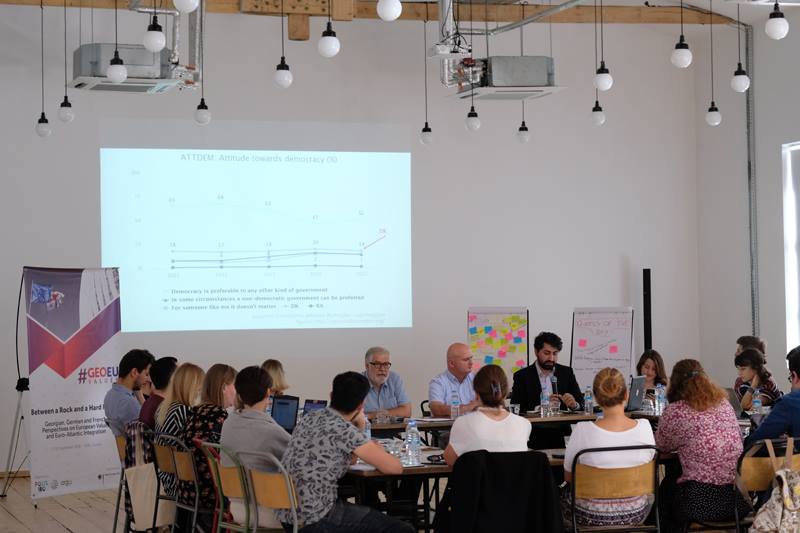
Participation for future: Youth in party politics in Germany, Georgia and beyond

Party politics is losing touch with civil society, most prominently youth. During the past months, we have discussed actions to include young people and their diverse positions on contemporary issues in politics with youth and young experts in Georgia and Germany. It has become clear that new forms of interaction between these increasingly disconnected groups are needed – and that the time is now!

A Comment by Frauke Seebass and Anna Kiknadze

Weiterlesen …

Eine Aufsicht gegen die “Schlupflöcher” des Binnenmarkts? Wie Europa gegen Geldwäsche vorgehen will

Ob Panama oder Paradise Papers, Lux oder Swiss Leaks, Russian oder Azerbaijani Laundromat und zu guter Letzt “Golden Visa” und “FinCEN Files”: Die letzten Jahre haben nicht wenige Skandale zu globaler Geldwäsche unter Beteiligung von Europas Banken und Jurisdiktionen ans Licht gebracht. Kann Deutschlands Vorsitz im Rat der EU die Bekämpfung von Geldwäsche auf EU-Ebene vorantreiben?

Ein Beitrag von Peter Müller

Weiterlesen …

Event Report | Feminism(s)| Part III: Feminism in Turkey

Together with Dr. Hürcan Asli Aksoy from the Centre for Advanced Turkey Studies (CATS) we discussed the history and waves of feminism in Turkey, its different manifestations and its fight to push back the pushback under the AKP government. Read our event report!

On a slippery slope: Mobility in the wake of Covid-19

The coronavirus brought the entire travel and mobility industry to a halt. Regional lockdowns and travel restrictions affect mobility on all levels, which leaves us wondering: do all forms of mobility suffer the same? Instead of focusing on one organisation, this time our focus goes to an entire industry. Are there sectors performing better during the pandemic and if so, what does that mean for the future of mobility?

A Comment by Kolin Schunck and Nicole Stein

Weiterlesen …

Reine (Re)Form-Sache? Die Nachhaltigkeit der GAP in der Kritik

Vom 20. bis zum 23. Oktober hat der seit Juli unter deutschem Vorsitz stehende Rat der Europäischen Union über eine umfassende Reform der Gemeinsamen Agrarpolitik (GAP) abgestimmt. Die dieses Jahr anstehende strukturelle Überarbeitung hatte allerdings nicht nur den wie alle sieben Jahre “klassischen” Reformbedarf, sondern musste vielmehr Bezug auf die durch die Covid-19-Krise befeuerten Krisensymptome nehmen. 

Ein Beitrag von Lukas Seelig

Weiterlesen …

May a hard Brexit clear the air after all?

Since the United Kingdom in 2016 voted not to remain in the European Union, Britain and the rest of Europe seem to move further apart, especially with a no-deal Brexit. Though we may learn more about each other during the transition period. I spoke to our sister-think tank in the UK about topics that are crucial in the eyes of young foreign policy experts.

An Interview with AK Glück and Agora

Weiterlesen …

Ist Deutschland bereit für vier weitere Jahre Trump?

Alle vier Jahre blickt die Welt gespannt auf die Wahlen eines Landes. So auch dieses Jahr, wenn in den USA wieder knapp 240 Millionen Wahlberechtigte zur Wahl des nächsten Präsidenten, des Repräsentantenhauses sowie 1/3 aller SenatorInnen aufgerufen sind. Ein Rückblick auf die US-Wahlnacht 2020 und ihre Bedeutung für die deutsche Außenpolitik.

Ein Beitrag von Esther Kern und Julius Kerkhoff

Weiterlesen …

Georgia’s youth is taking European association to another level

In this article, we highlight the role of Germany and #EU2020DE in the framework of the Eastern Partnership (EaP) with a focus on Georgia and our ongoing project #GEOYOUTH2020 – ‘Manifesto Engaging Youth in Politics in Georgia’, while discussing the role of funding for civil society cooperation to support democratisation processes in the region.

A Comment by AK Glück and Frauke Seebass

Weiterlesen …

O Captain! My Captain! – Navigating e-learning and its pitfalls

Remote working is hardly limited to paid labour or office work. Many people all over the globe spent their time working in education: in schools, universities, or vocational schools. Rising Covid-19 cases and consequential lockdowns in various countries forced educational institutions to adapt to a new way of management and teaching at an unprecedented scale. Often with varying degrees of success.

A Comment by Christoph M. Abels and Nicole Stein 

Weiterlesen …