A Comment by Maike Laengenfelder and Karoline Färber

As part of our event series on Feminist Development Policy, organized by the programs Gender and International Politics and De_Constructing Development, our aim was to discuss the BMZ’s strategy on a feminist development policy from an Afghan postcolonial perspective. Together with Humaira Rasuli and Suraya Pakzad, we critically questioned whose voices are heard, who is visible and who dominates not only the strategy’s conception and the related public discourse but also development policy in Afghanistan in general.
by Fabia van Melis On the 25th of October, the event series „Feminist Foreign Policy(s): An On-Going Journey through Global Policies„, organised by the programme Gender and International Politics, started. Under the topic “Revisiting Feminist Foreign Policy: Exploring Sweden’s Journey and the Power of the ‚F‘-Word”, we looked at the feminist foreign policy … Weiterlesen …
by Julius-Anton Bussenius, Lars Feyen, Jill Sophie Haering, Ada Kristine Monstad and Konstantin Müller-Rettstatt 10.10.23 Russia’s invasion of Ukraine has opened a rift between Western nations such as the United States or European countries and much of the developing world. No forum offers a more distinct example of the rising ambitions among … Weiterlesen …
By Sophie Domres & Lena Wittenfeld 10.10.2023 While Feminist Foreign Policy (FFP) as a normative foreign policy approach gains global traction, its application often remains superficial, leading to varied interpretations, limited impact and various tensions. This paper comprehensively unveils the discourses surrounding FFP, highlighting its (in)consistent yet transformative potential. We initially argue that FFP’s shift … Weiterlesen …
Als Teil der Fokusreihe ‚Ocean Talks‘ nimmt dieser Podcast die Region rund um das Südchinesische Meer genauer unter die Lupe und analysiert im Interview mit Prof. Alfred Gerstl und Florian Feyerabend die nachbarschaftlichen Beziehungen zwischen China und Vietnam.
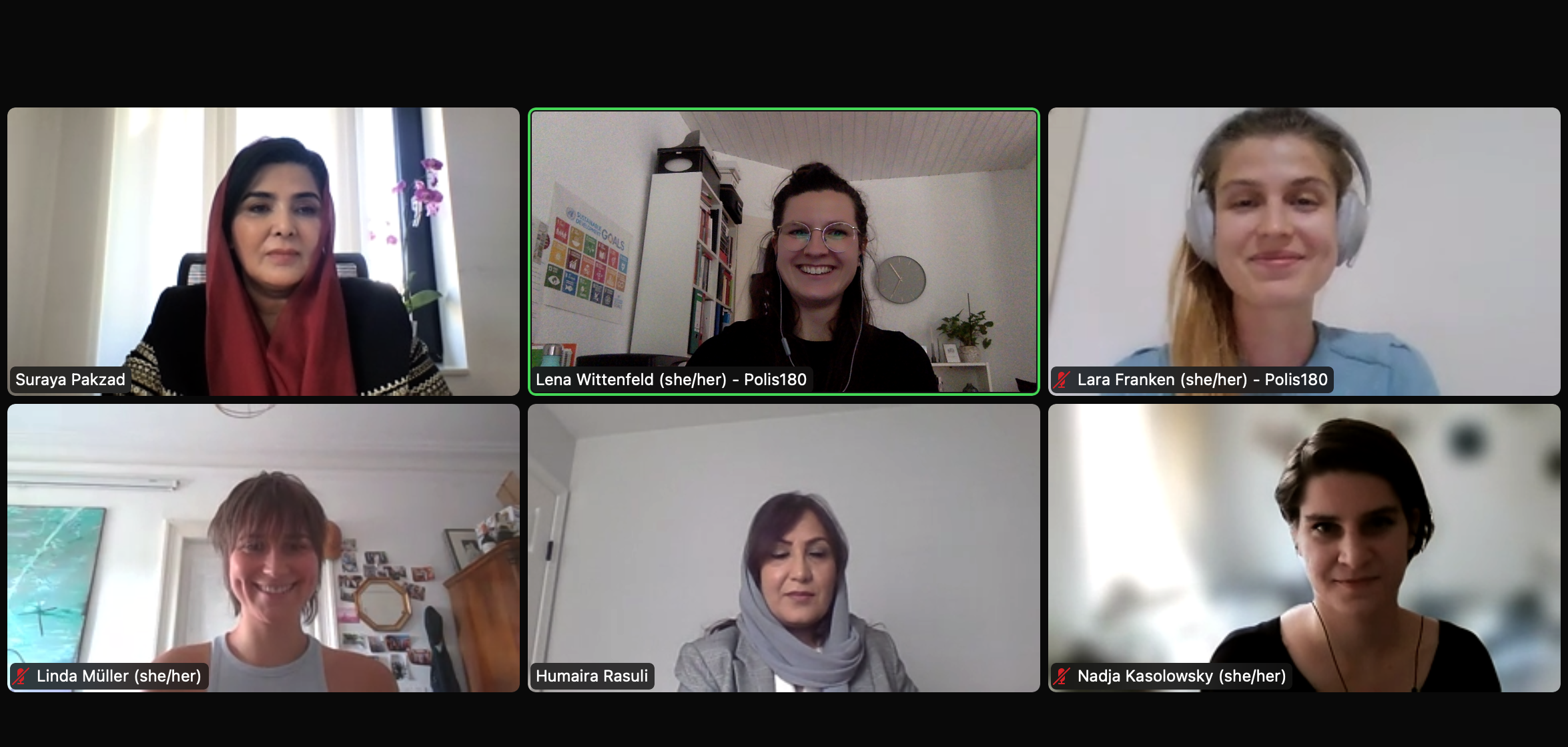
As part of our event series on Feminist Development Policy, organized by the programs Gender and International Politics and De_Constructing Development, our aim was to discuss the BMZ’s strategy on a feminist development policy from an Afghan postcolonial perspective. Together with Humaira Rasuli and Suraya Pakzad, we critically questioned whose voices are heard, who is visible and who dominates not only the strategy’s conception and the related public discourse but also development policy in Afghanistan in general.
Das Netzwerk 1325, bestehend aus 18 intersektional feministisch arbeitenden Nichtregierungsorganisationen, hat sich gefragt: Was muss sich strukturell und inhaltlich ändern, damit von einer feministischen Außenpolitik Deutschlands gesprochen werden kann? Antworten enthält ein gemeinsames Policy Brief.
Nach jahrelangem Stillstand kommt Bewegung in das Gemeinsame Europäische Asylsystem (GEAS). Doch die Reformvorschläge sind kontrovers – und mit hohen Kosten für Schutzsuchende und unsere Werte verbunden. Seit 2016 blockierte vor allem der Rat der EU eine dringend notwendige Reform des GEAS. Im Juni 2023 folgte er schließlich der Europäischen Kommission und dem Europäischen … Weiterlesen …
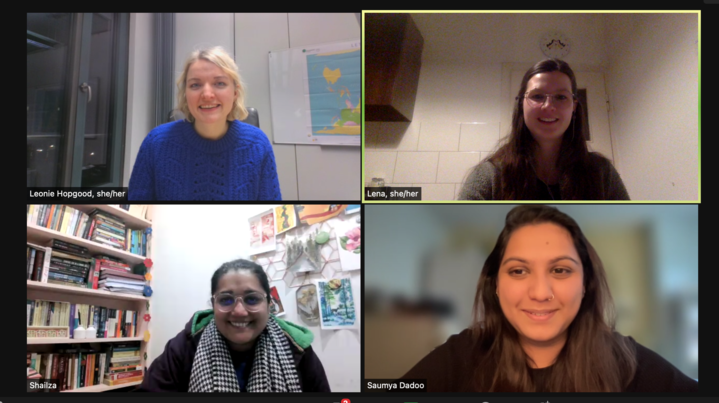
As part of our Feminism(s) series we came together with Saumya Dadoo and Shailza Sharma to talk about feminism(s) in India. The aim of our teatime event has been to learn more about Indian feminism(s) and discuss ideas of feminism, feminist activism and challenges to women’s equality in modern-day India aiming at building and understanding of the Indian cultural context and strengthen knowledge about the state of gender equality in this diverse and heterogeneous subcontinent.
Kann Neuropolitik ein Weg sein, gespaltene Gesellschaften wieder zusammenzubringen? Hierüber sprechen wir in dieser Folge mit Dr. Liya Yu, Politikwissenschaftlerin und Autorin des Buches „Vulnerable Minds: The Neuropolitics of Divided Societies“. Zudem geht es um Diskriminierung, antiasiatischen Rassismus sowie Internationale Beziehungen.
The fashion industry keeps on reinventing itself. Not only now during fashion week season with all the shows and collections but in a broader sense. It remains to be seen how digitization will influence fashion. The Polis180 article: Digital Fashion Week – an opportunity or in emergency only? touches on some of these topics. However, … Weiterlesen …
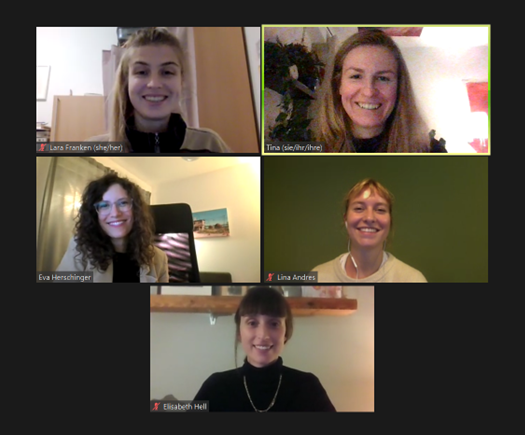
Mit unseren zwei Expertinnen – D Dr. habil. Eva Herschinger, Senior Researcher am Center for Intelligence and Security Studies an der Universität der Bundeswehr München, und Elisabeth Hell, Zuständige für den Bereich Rechtsextremismus beim Violence Prevention Network gGmbh – haben wir uns die Rolle von Gender in rechtsextremen Bewegungen genauer angeschaut: P.

Politische Institutionen, einzelne Politiker*innen, Vereine und Unternehmen werden weltweit immer häufiger Ziele von Cyberangriffen – insbesondere, wenn sie sich kritisch mit autokratischen Regimen auseinandersetzen. Vor diesem Hintergrund wird deutlich, dass sich auch Polis180 als ein wachsender Verein, der sich differenziert mit aktuellen politischen Entwicklungen und europäischer und internationaler Politik beschäftigt, noch stärker mit Fragen der digitalen Sicherheit befassen muss.
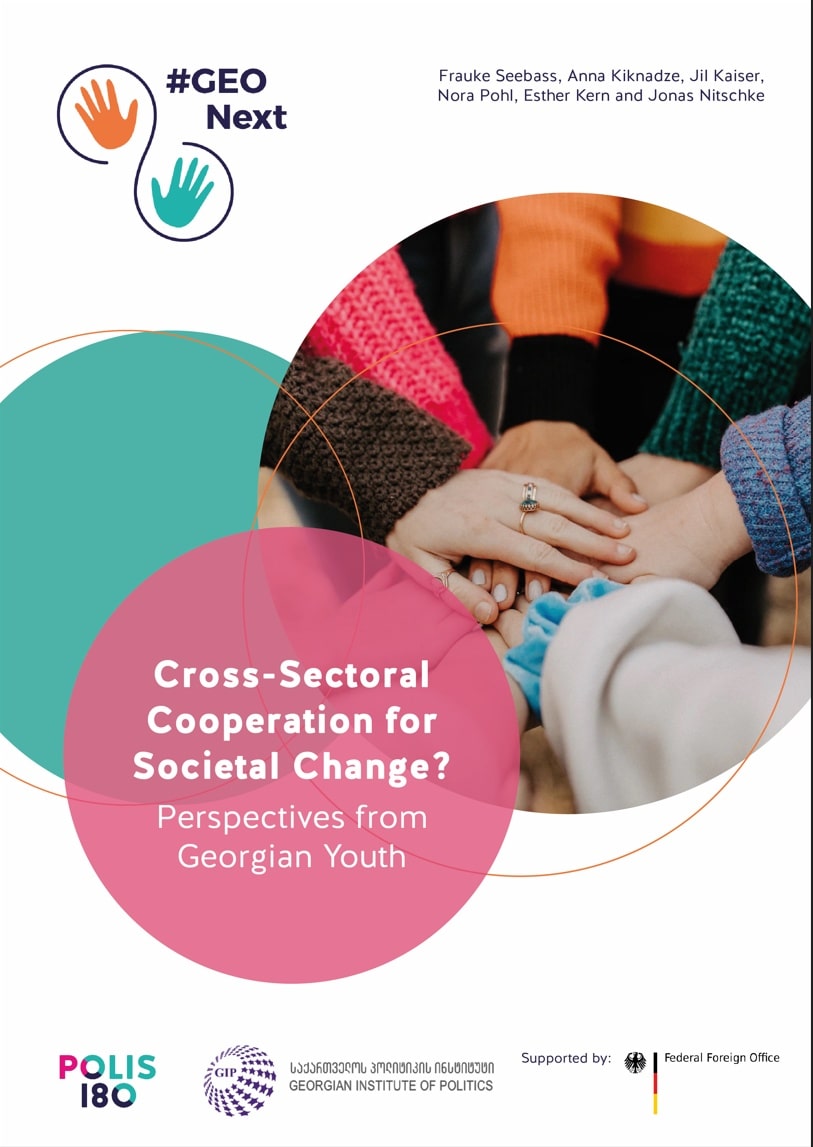
Informed by international experts, research and practical experience in Georgia and Germany in the framework of #GEONext – Partnerships for Youth Engagement, this publication aims at providing a comprehensive perspective of the advantages and challenges of cross-sectoral cooperation, as well as best practice examples and tangible recommendations for successful collaborations across sectors.
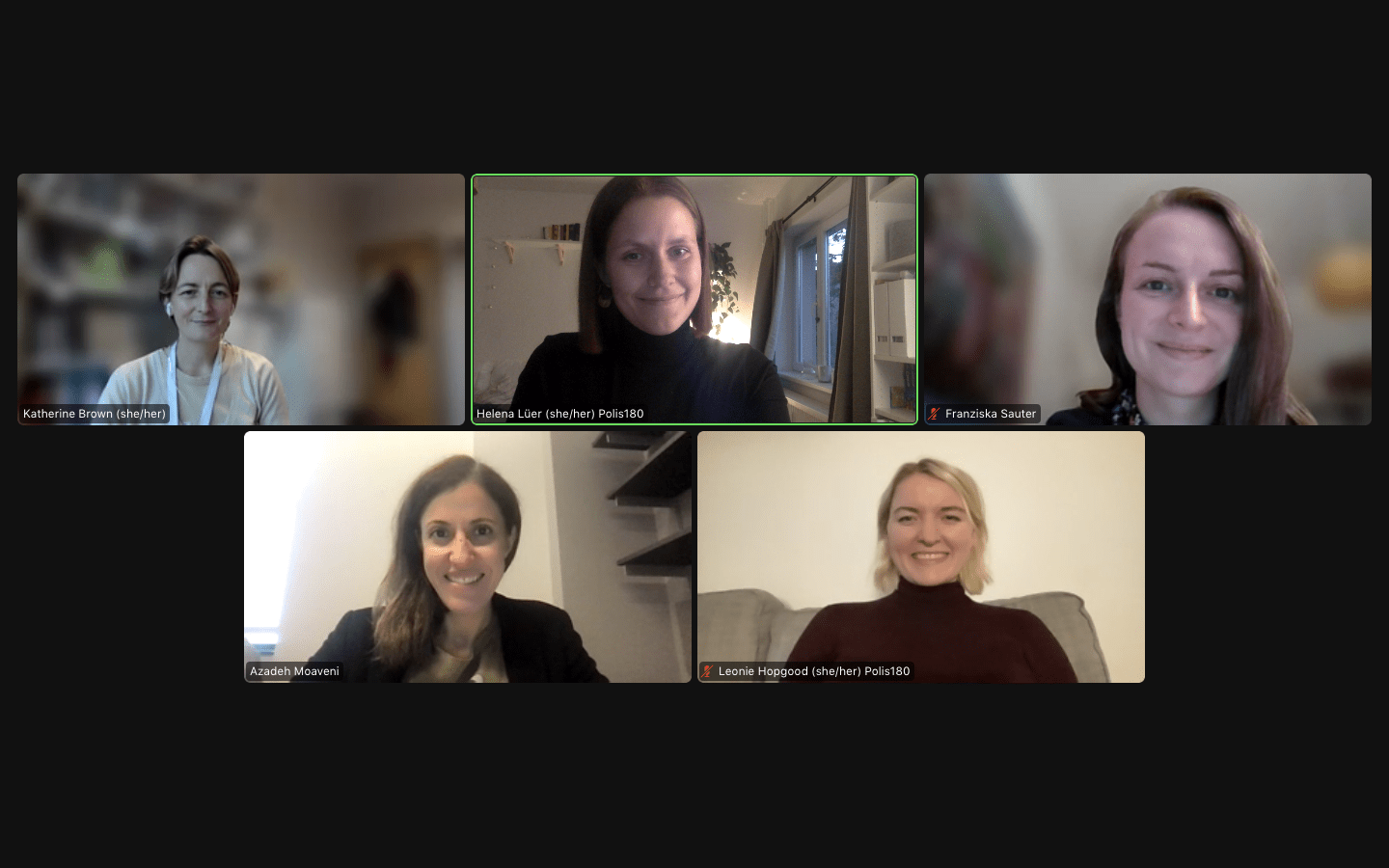
Fragen von der geschlechtsspezifischen Dimension von Flucht haben im in einer gemeinsamen Veranstaltung der Programme Gender und Internationale Politik und Migration von Polis180 mit den Referentinnen Ulrike Krause und Tatevik Dallakyan diskutiert. Zudem wurde die Veranstaltung von Gedichten von Rojin Namer und Robina Karimi von The Poetry Project begleitet.
Im Sommer haben wir einen Workshop zur Umsetzung von feministischer Entwicklungspolitik organisiert. Hier haben wir mit Vertreter*innen aus dem Bundestag, BMZ, GIZ und Zivilgesellschaft über Erwartungen an eine feministische Außenpolitik diskutiert. Die Ergebnisse und Empfehlungen für die BMZ-Strategie findet ihr hier.
Das Netzwerk 1325, bestehend aus 18 intersektional feministisch arbeitenden Nichtregierungsorganisationen, hat sich gefragt: Was muss sich strukturell und inhaltlich ändern, damit von einer feministischen Außenpolitik Deutschlands gesprochen werden kann? Antworten enthält ein gemeinsames Policy Brief.
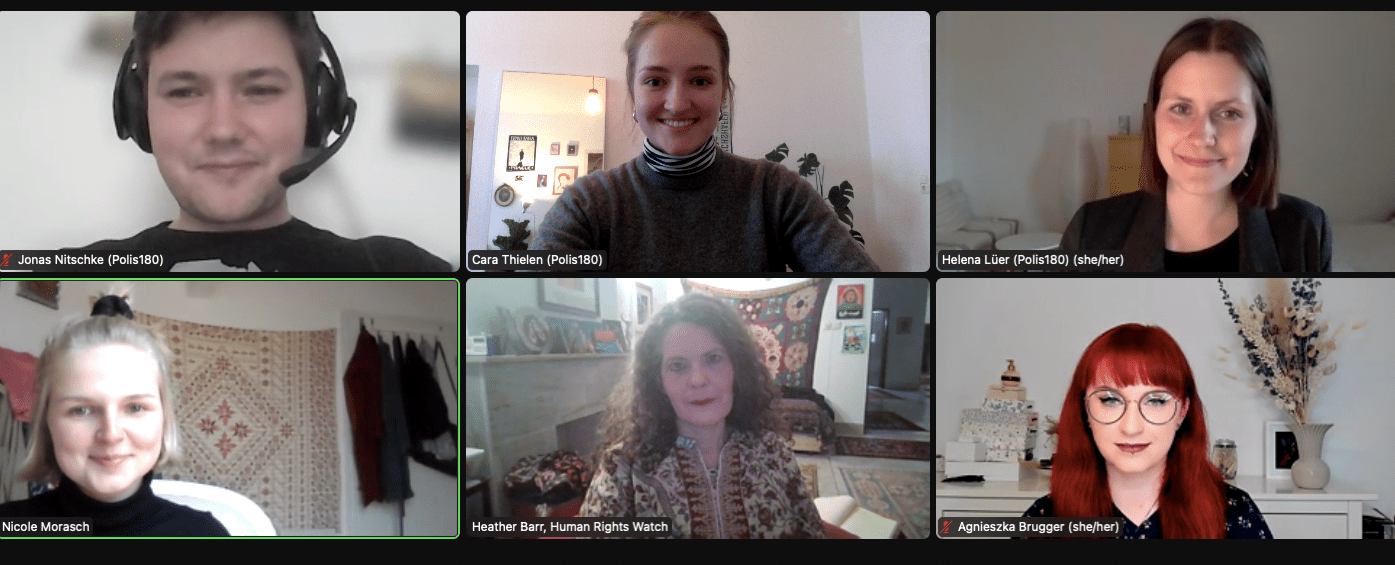
Fragen von der geschlechtsspezifischen Dimension von Flucht haben im in einer gemeinsamen Veranstaltung der Programme Gender und Internationale Politik und Migration von Polis180 mit den Referentinnen Ulrike Krause und Tatevik Dallakyan diskutiert. Zudem wurde die Veranstaltung von Gedichten von Rojin Namer und Robina Karimi von The Poetry Project begleitet.
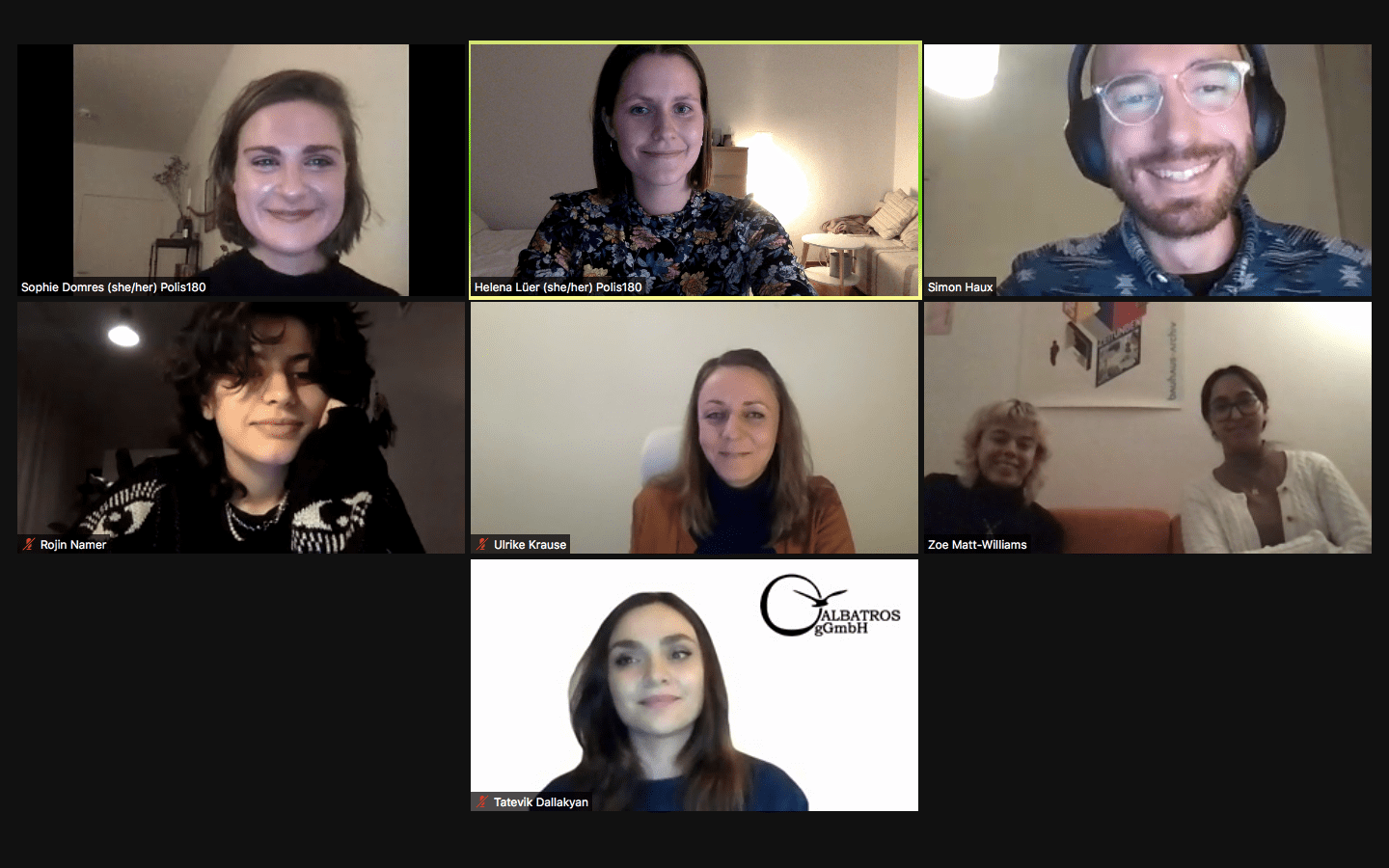
Fragen von der geschlechtsspezifischen Dimension von Flucht haben im in einer gemeinsamen Veranstaltung der Programme Gender und Internationale Politik und Migration von Polis180 mit den Referentinnen Ulrike Krause und Tatevik Dallakyan diskutiert. Zudem wurde die Veranstaltung von Gedichten von Rojin Namer und Robina Karimi von The Poetry Project begleitet.
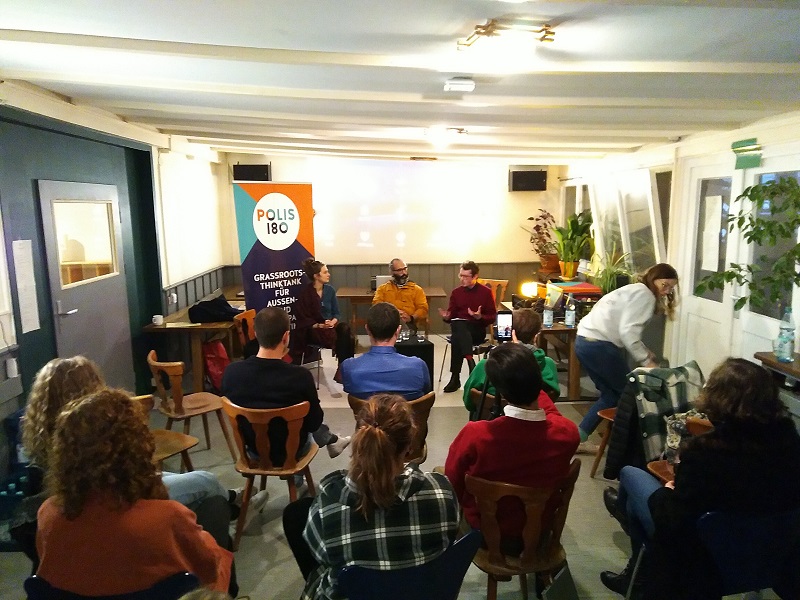
Die Veranstaltung im Rahmen unseres Projekts DIASPORA? diente der Vernetzung und dem Erfahrungsaustausch zwischen Engagierten und Stakeholdern migrantischer, diasporischer Vereine, die im Bereich der EZ aktiv sind.
Die Istanbul Konvention ist eines der wichtigsten Abkommen zur Beseitigung von Gewalt gegen Frauen – doch bei ihrer Implementierung gibt es noch große Lücken. Im Polis Paper N° 15 zeigen die Autor*innen, dass die Ziele der Konvention kontinuierlich verteidigt werden müssen, und formulieren konkrete Handlunsgsempfehlungen.
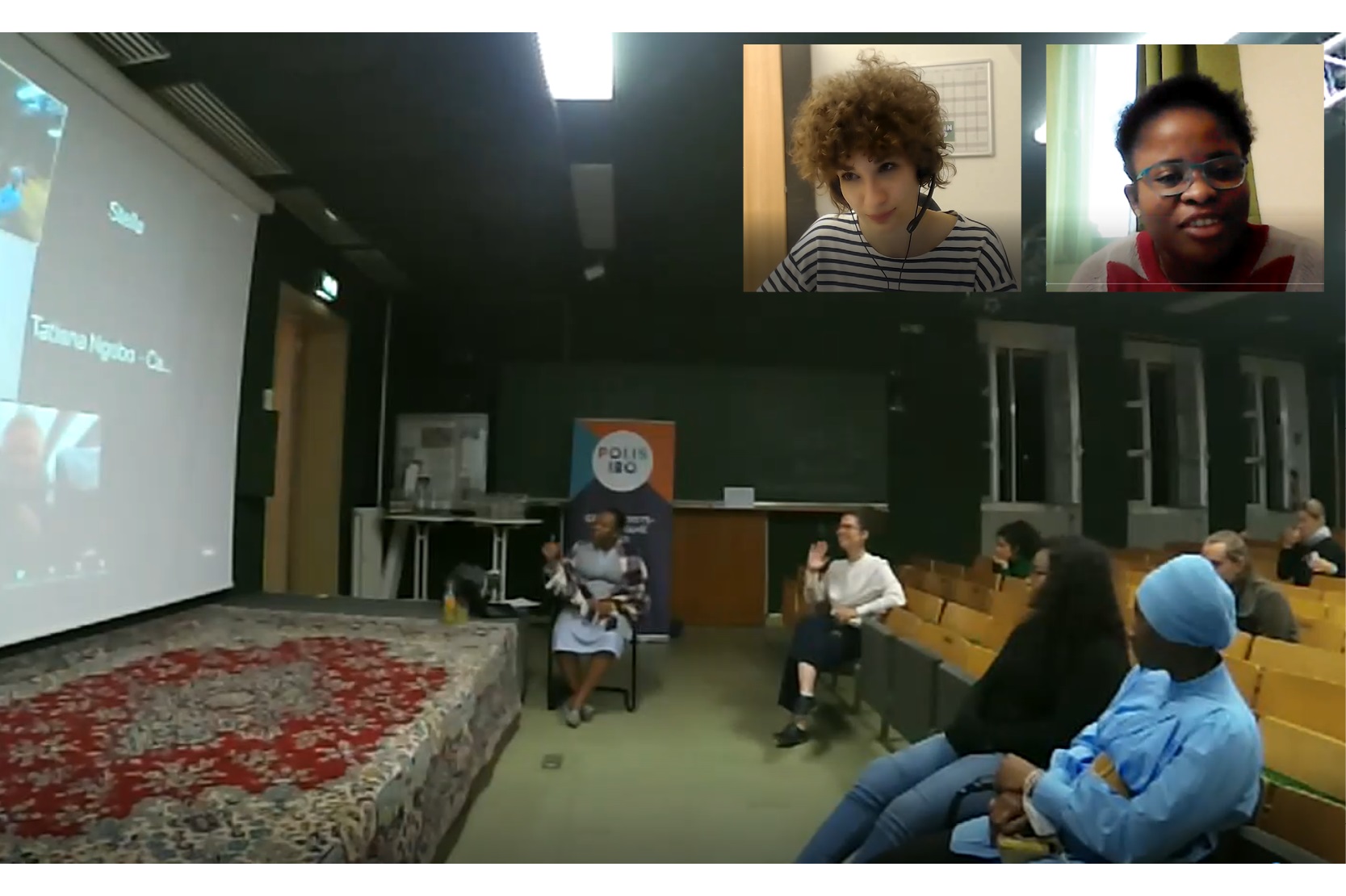
Die Veranstaltung im Rahmen unseres Projekts DIASPORA? diente der Vernetzung und dem Erfahrungsaustausch zwischen Engagierten und Stakeholdern migrantischer, diasporischer Vereine, die im Bereich der EZ aktiv sind.
How can the inclusion of women in international trade contribute to gender equality? And what kind of mechanisms are needed to promote women’s participation in trade processes? We discussed these and other questions during our event “Women & Trade – Empowerment Through Inclusiveness“.
Die Wahl zum 20. Deutschen Bundestag am 26. September 2021 steht an und im Wahlkampf dazu gehen viele wichtige Sachthemen oftmals verloren und insbesondere außen- und europapolitische Fragen stehen seltener im Fokus. Wir von Polis180 sind davon überzeugt, dass die Positionen der Parteien zu diesen Fragen wichtig für die Wahlentscheidung – auch und vor allem von jungen Menschen – sind. Aus diesem Grund bieten wir auch zu dieser Wahl einen Wahlprogrammcheck an.

A Comment by Maike Laengenfelder and Karoline Färber
Ein Beitrag von Rebekka Pflug und Leonie Hopgood

Together with Dr. Hürcan Asli Aksoy from the Centre for Advanced Turkey Studies (CATS) we discussed the history and waves of feminism in Turkey, its different manifestations and its fight to push back the pushback under the AKP government. Read our event report!
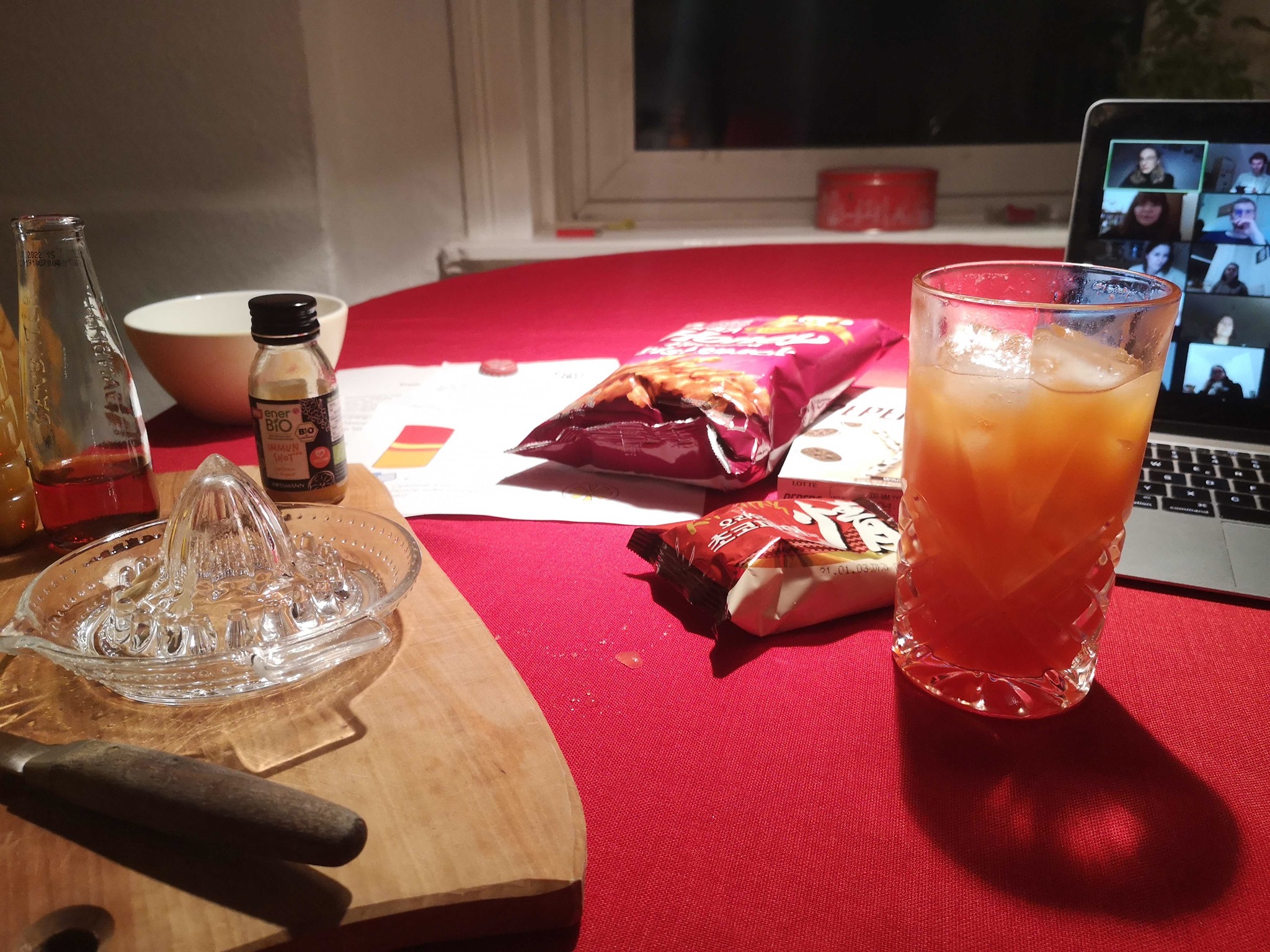
In der finalen Ausgabe des diesjährigen „Polis kocht!“-Jahres sprachen wir MdA Benedikt Lux von Bündnis 90/Die Grünen sowie Nataly Jung-Hwa Han vom Korea-Verband über die “Trostfrauen” und den Streit um die den Opfern sexualisierter Kriegsgewalt gewidmete Berliner Friedensstatue.
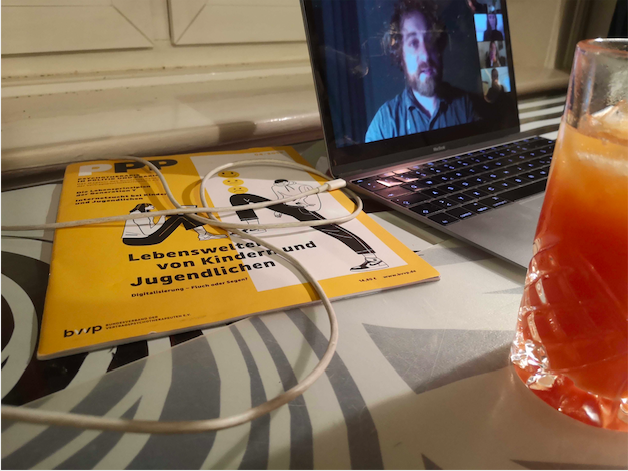
In der letzten Ausgabe von Polis kocht! sprachen wir mit dem SPD-Bundestagsabgeordneten Dr. Karama Diaby über die Versorgung und Verteilung von Flüchtlingen in Europa diskutieren und die vielfältigen Herausforderungen, sie sich im Anschluss an die Flucht ergeben.
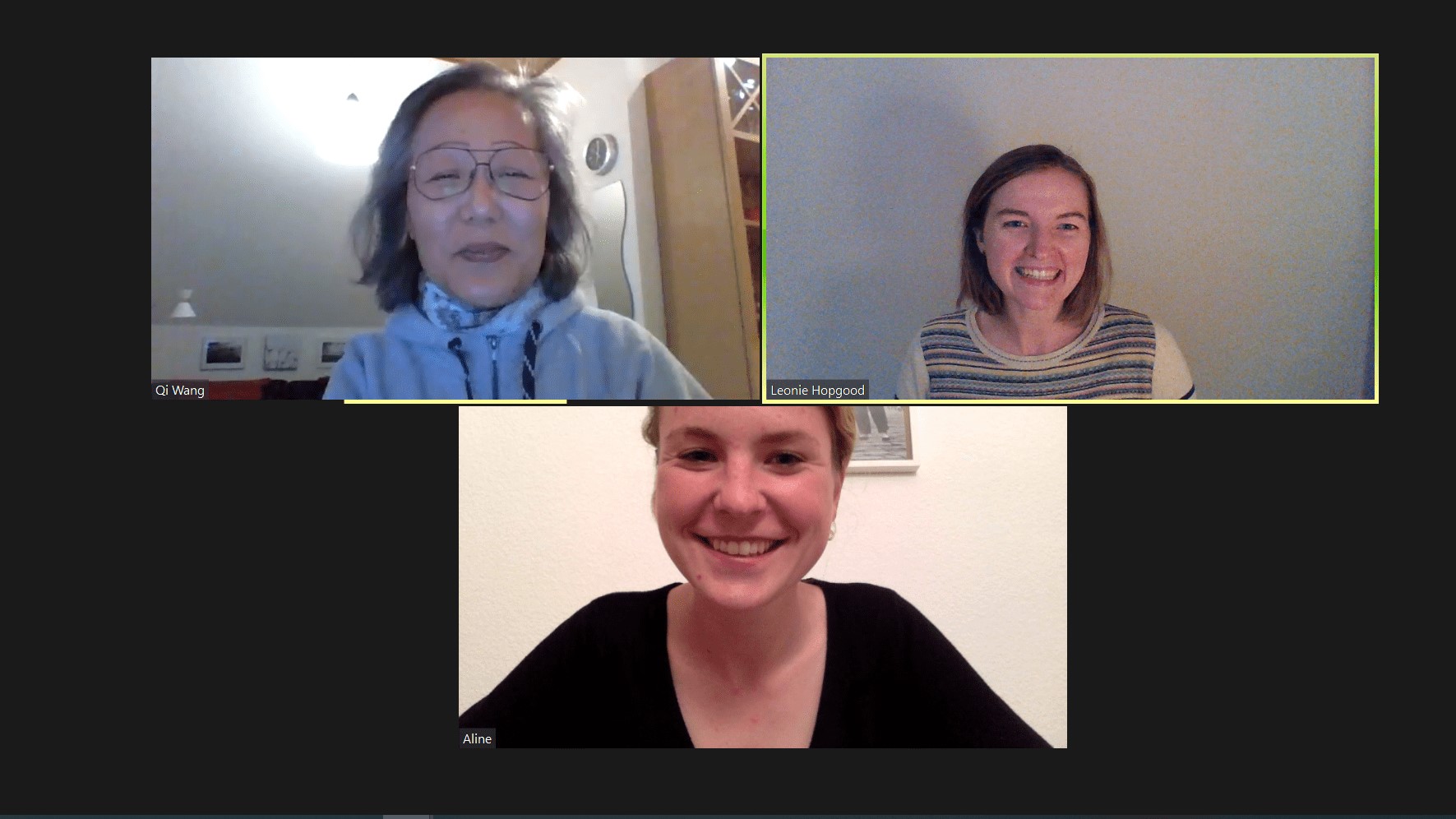
Many women in China still feel strong societal pressure to conform to conservative gender roles and their freedom of expression is limited. We have spoken to Dr. Qi Wang about the issues that Chinese women face and how they are trying to change them. Read our event report!