nEUrds Newsletter No. 14 – EU sanctions against Israel, CEPA with Indonesia, and simplification of the CBAM
Welcome back to the latest edition of our nEUrds newsletter, where we dive deep into the riveting world of European economic policy with a twist of wit and a dash of insight. This time, we take a closer look at the latest developments in international trade. The EU is currently considering sanctions against Israel, which could include the suspension of trade concessions. At the same time, the EU is seeking to strengthen global partnerships and has just concluded its largest Comprehensive Economic Partnership Agreement (CEPA) to date with Indonesia. Finally, there is news on the Carbon Border Adjustment Mechanism (CBAM): the European Parliament has approved a new simplification of the scheme.

Der globale Wettlauf um kritische Rohstoffe: Risiken und Chancen einer europäischen Bergbau-Renaissance

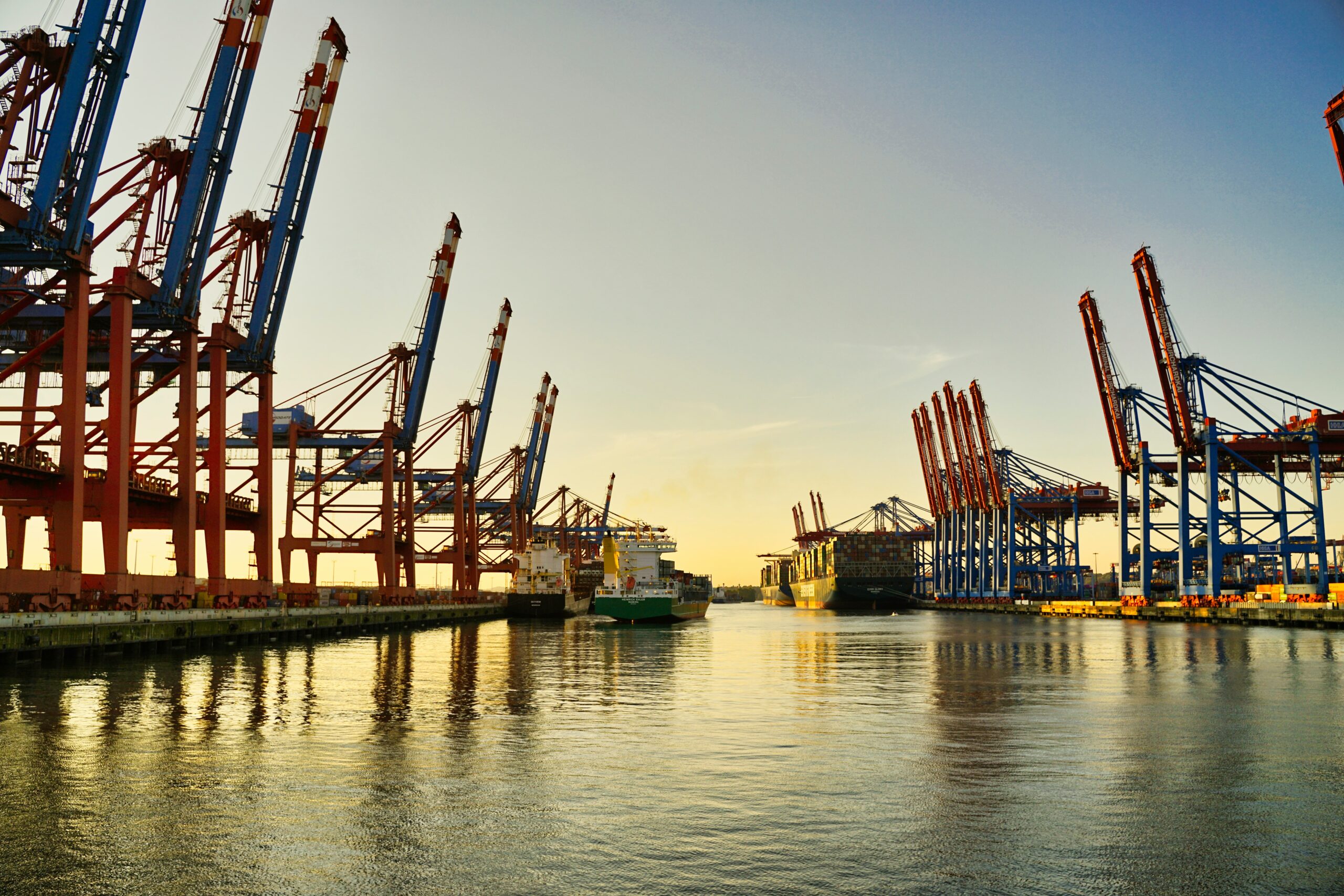
Weltweit ist ein sich zuspitzender Wettlauf um kritische Rohstoffe zu beobachten. Er heizt bewaffnete Konflikte an, zerstört Naturräume und ist zugleich von immenser Bedeutung für die europäische Wirtschaft und das Erreichen der Klimaschutzziele. Um soziale und ökologische Schäden wirkungsvoll zu begrenzen und zugleich wirtschaftliche Sicherheit zu gewährleisten, muss Deutschland eine proaktive Rohstoffaußenpolitik betreiben und eigene sowie europäische Kapazitäten stärken.

nEUrds Newsletter – G7 summit, Critical Minerals Action Plan, Multiannual Financial Framework (MFF), and NextGenerationEU

Welcome back to the latest edition of our nEUrds newsletter, where we dive deep into the riveting world of European economic policy with a twist of wit and a dash of insight.This time around, we break down the European Commission’s country‐specific analyses on each member’s fiscal headaches and bespoke public‐finance prescriptions, before zeroing in on the ECB’s latest quarter‐point cut to its deposit rate; unveil the EU’s ambitious rebrand of its securitization and retail investment markets; track the back‐and‐forth over the upcoming 18th Russia sanctions package; review fresh EU–US tariff tête-à-têtes; and close with defence developments. Plus, don’t miss our „Crystal Ball Gazing“ for a glimpse into the future, and „Page Turners and Screen Burners“ for your next favorite read.

nEUrds Newsletter – ECB’s Global Euro Report, US–China Trade Truce & the Clean Industrial Deal

Welcome back to the latest edition of our nEUrds newsletter, where we dive deep into the riveting world of European economic policy with a twist of wit and a dash of insight.This time around, we break down the European Commission’s country‐specific analyses on each member’s fiscal headaches and bespoke public‐finance prescriptions, before zeroing in on the ECB’s latest quarter‐point cut to its deposit rate; unveil the EU’s ambitious rebrand of its securitization and retail investment markets; track the back‐and‐forth over the upcoming 18th Russia sanctions package; review fresh EU–US tariff tête-à-têtes; and close with defence developments. Plus, don’t miss our „Crystal Ball Gazing“ for a glimpse into the future, and „Page Turners and Screen Burners“ for your next favorite read.

nEUrds Newsletter – Your Guide to What’s Moving the Bubble: 7th Edition

Welcome back to the latest edition of our nEUrds newsletter, where we dive deep into the riveting world of European economic policy with a twist of wit and a dash of insight.This time around, we break down the European Commission’s country‐specific analyses on each member’s fiscal headaches and bespoke public‐finance prescriptions, before zeroing in on the ECB’s latest quarter‐point cut to its deposit rate; unveil the EU’s ambitious rebrand of its securitization and retail investment markets; track the back‐and‐forth over the upcoming 18th Russia sanctions package; review fresh EU–US tariff tête-à-têtes; and close with defence developments. Plus, don’t miss our „Crystal Ball Gazing“ for a glimpse into the future, and „Page Turners and Screen Burners“ for your next favorite read.

nEUrds Newsletter – Your Guide to What’s Moving the Bubble: 6th Edition

This week, we unpack the historic first post-Brexit UK-EU Summit – where leaders paved a “new chapter” with sweeping deals on fisheries, a streamlined sanitary and phytosanitary framework, and a landmark security & defence partnership – before decoding who really won (and lost) in the “grab bag” of agreements; we then turn to the EU’s 17th Russia sanctions package, the Commission’s plan to tame the flood of ultra-fast-fashion parcels with new handling fees, and the latest Trump-era tariff theatrics; finally, we spotlight the €150 billion SAFE arms-loan fund approved under the “ReArm Europe” push and consider what’s next for transatlantic and pan-European defence cooperation.

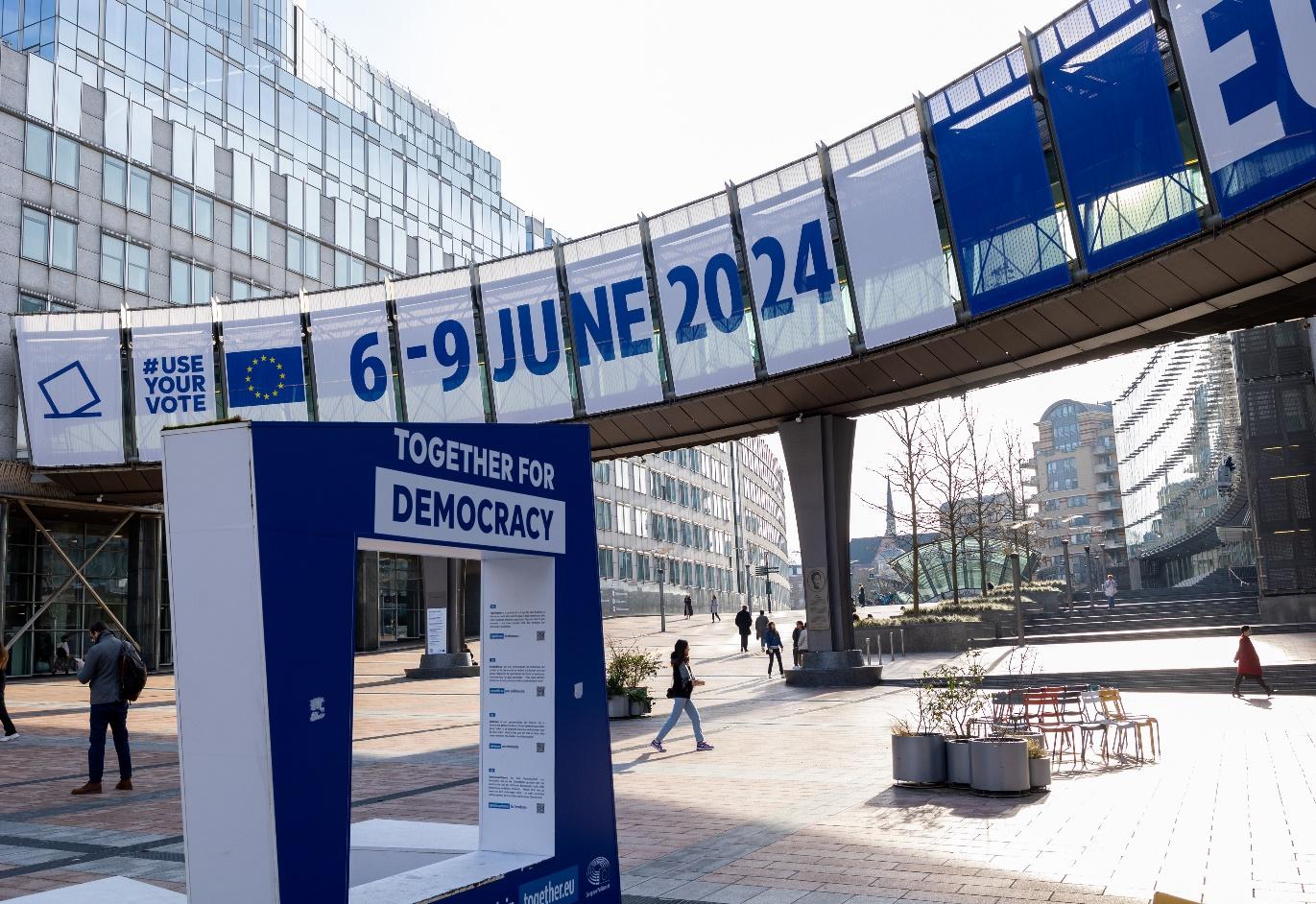
Who has Stolen the European Elections? Let’s Not Blame the Voters

EU elections should focus on Europe, but they tend to be hijacked by national agendas. The 2024 election nights in France and Germany reveal who should take steps to make the elections more European.   by Sebastian Emde   Over 40 years ago, Karlheinz Reif and Hermann Schmitt described European elections as „second-order national elections„. … Weiterlesen …

Wirtschaftspolitische Zukunft Europas: Ein Blick auf die Wahlprogramme 2024

Die bevorstehende Europawahl stellt einen entscheidenden Moment für die politische Landschaft Europas dar. In einer Zeit, in der die Europäische Union mit zahlreichen Herausforderungen konfrontiert ist – vom russischen Angriffskrieg auf die Ukraine über den Klimawandel bis hin zu geopolitischen Spannungen – ist die wirtschaftspolitische Ausrichtung der verschiedenen Parteien von besonderer Bedeutung. Die Wahlprogramme der … Weiterlesen …

Polis180 Wahlprogrammcheck Europawahl 2024

Angesichts aktueller Herausforderungen wie des Klimawandels, des zunehmenden Rechtsrucks sowie geopolitischer Spannungen und Konflikte ist es entscheidend, ein gestärktes und zukunftsfähiges Europa zu schaffen. Die bevorstehende Europawahl bietet den Bürger*innen die Möglichkeit, durch ihre Stimmen Prioritäten für die Zukunft Europas zu setzen und so die Richtung der Europäischen Union (EU) und ihrer Politik für die … Weiterlesen …

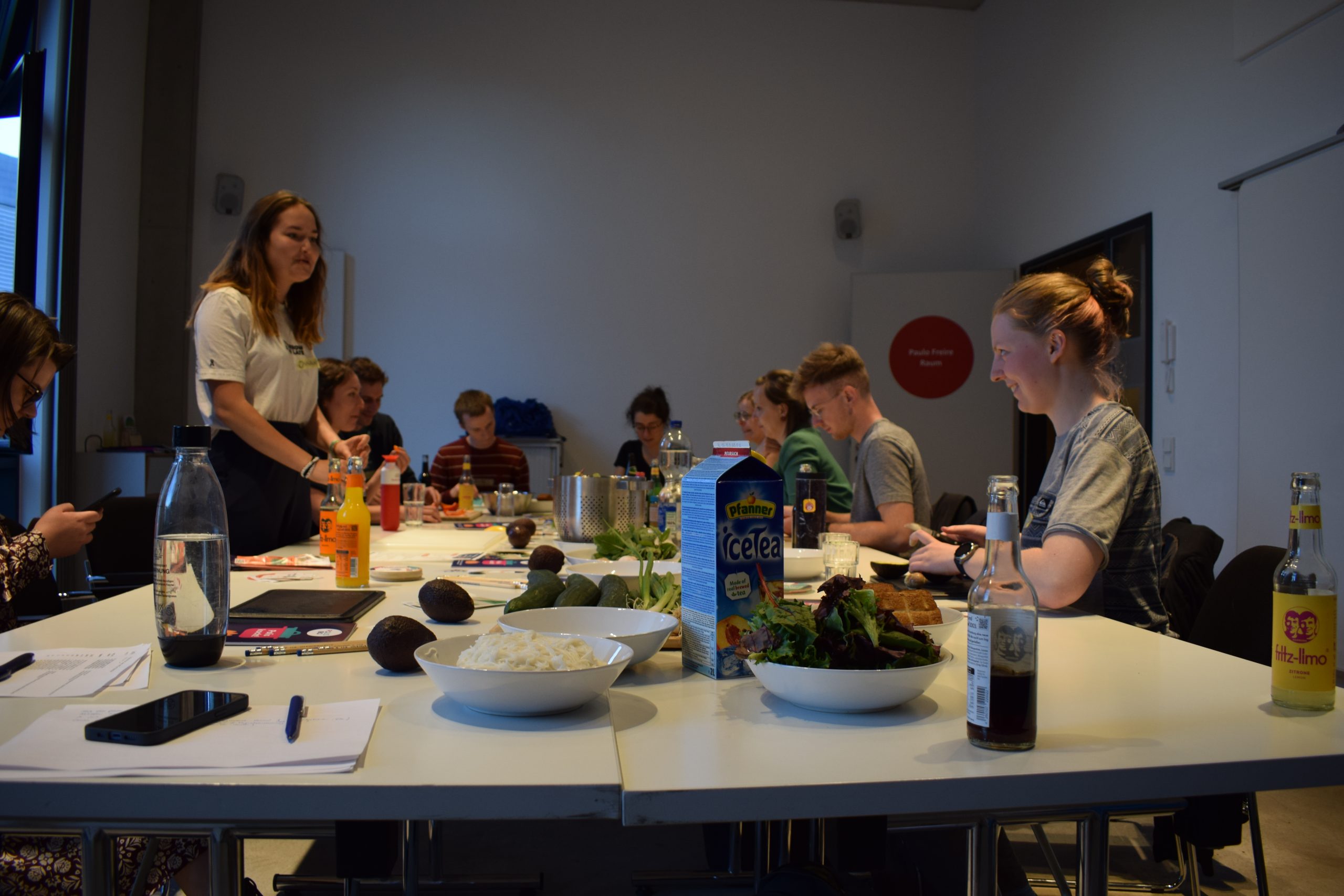
Event report | Europa kocht! FFPxEU: A Feminist Foreign Policy for the European Union – Too many cooks spoil the broth?!

As part of our Europa Kocht! series, and of our Gender & International Politics’ project Feminist Foreign Policy(s): An On-Going Journey through Global Policies, we discussed whether the EU is able to implement a Feminist Foreign Policy (FFP) approach to its foreign policy approaches and what such an FFP approach could look like with our wonderful speaker Leonie Stamm.

Brüsseler Bahnhof: Fueling Change: Inside Europe’s Hydrogen Economy – Ruud Kempener, European Commission

We’re joined by Ruud Kempener from Commissioner Kadri Simson’s cabinet, offering unique insights into the continent’s hydrogen landscape. Our conversation takes you on a journey through Europe’s ambitious efforts to bolster its hydrogen economy. Explore the legislative initiatives that are driving change and the innovative markets emerging from these endeavors, including the significant role played by the European Hydrogen Bank.

Brüsseler Bahnhof: Fuel of the Future? – Eine Analyse der deutschen Wasserstoffwirtschaft

In dieser Podcast-Folge des “Brüsseler Bahnhofs” dreht sich alles um Wasserstoff als Energieträger der Zukunft. Hierzu gibt Cara Bien, Energiereferentin des Bundesverbandes der Deutschen Industrie, Einblicke in die Bedeutung der Nationalen Wasserstoffstrategie und die verschiedenen Umstellungen und Herausforderungen die die deutsche und europäische Wirtschaft erwarten.

Wahlprogramm? Check! Polis180 die Wahlprogramme der Parteien zusammengefasst

Die Wahl zum 20. Deutschen Bundestag am 26. September 2021 steht an und im Wahlkampf dazu gehen viele wichtige Sachthemen oftmals verloren und insbesondere außen- und europapolitische Fragen stehen seltener im Fokus. Wir von Polis180 sind davon überzeugt, dass die Positionen der Parteien zu diesen Fragen wichtig für die Wahlentscheidung – auch und vor allem von jungen Menschen – sind. Aus diesem Grund bieten wir auch zu dieser Wahl einen Wahlprogrammcheck an.

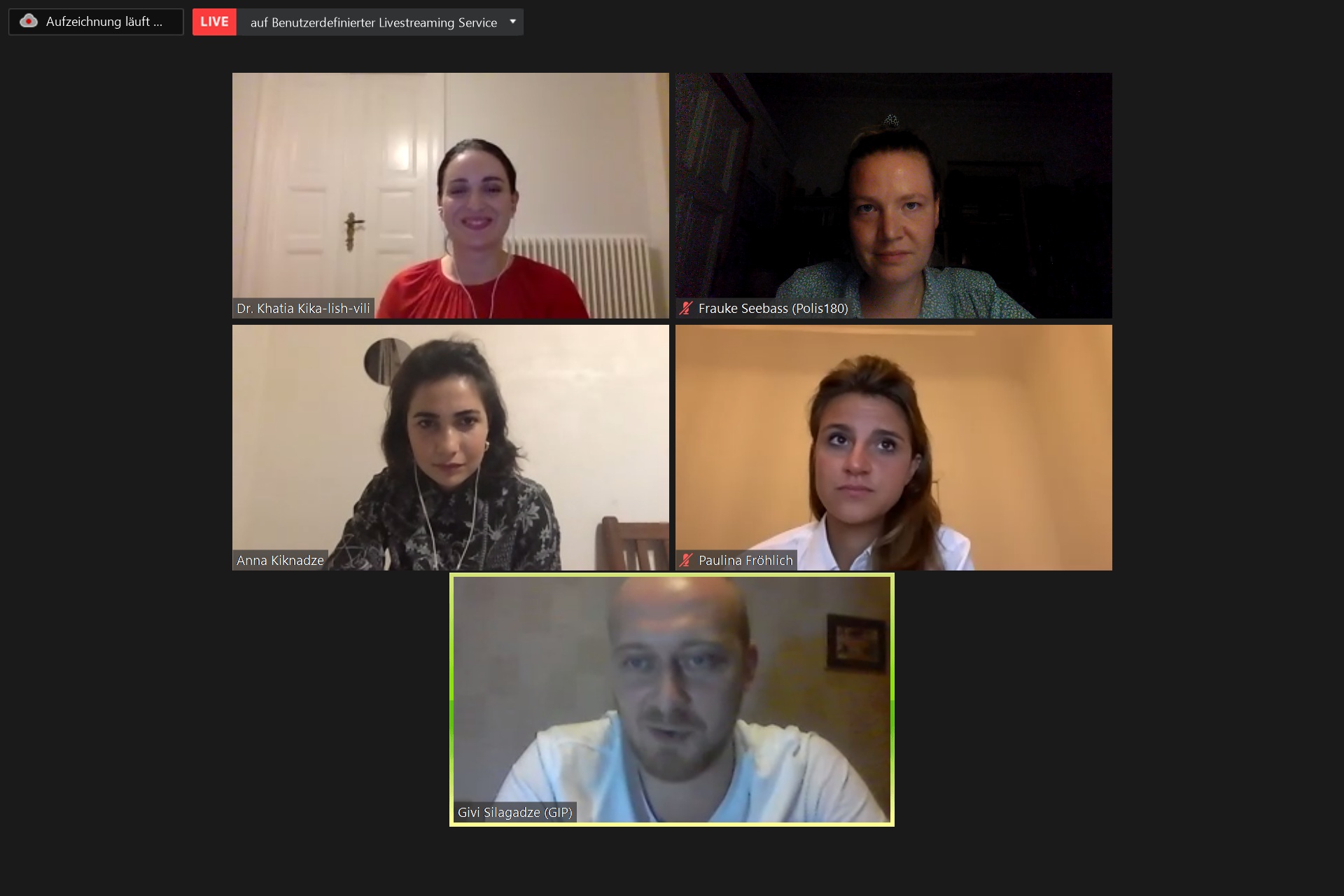
Electing the Future: Participation of Civil Society and Youth in Georgian Party Politics | Event Report

Electing the Future

Which instruments do civil society actors have to engage with parties in Georgia and Germany, and how can these mechanisms be enhanced? What is the role of young people in party politics, and how can their voices help to diversify political discourse in the country? We discussed these and other questions with experts in Berlin and Tbilisi in a Zoom panel – find the summary here!

Jahresbericht 2019

Ein turbulentes Jahr voller Projekte und Veranstaltungen liegt hinter Polis. Der Jahresbericht zeigt unsere Highlights 2018 – und gibt einen Ausblick auf die spannenden Aktivitäten, die uns 2019 beschäftigen!

Polis Brief N° 15 | Kohle oder Klima?

Die folgende Analyse zeigt, wie der Kohleausstieg der Wirtschaft und den Beschäftigten in den betroffenen Regionen dienen kann. Im Fokus stehen die Arbeitsmarktpolitik, sowie Infrastruktur- und Innovationsausbaumaßnahmen mit ihren potenziell positiven und negativen Auswirkungen. Deutschland muss seine internationale Vorbildfunktion nutzen und als wohlhabendes sowie technologisch entwickeltes Land zeigen, dass wissenschaftlich basierte Maßnahmen zum Klimaschutz sozialer Gerechtigkeit nicht entgegenstehen.

Polis Paper N° 12 | Rhetorics of the crisis

Take a look at the foreign policy rhetoric during the coronavirus pandemic: Fourteen Polis180-members examined government narratives closely related to COVID-19. They analyse positions of twelve countries on five continents. This paper shows how political communication works in the age of Twitter and how the pandemic offers a platform for governments to express their ambitions for regional and global influence.

Polis Brief N° 16 | Hungern für den Klimaschutz?

Dieser Brief widmet sich den beiden Sustainable Development Goals (SDG) „Kein Hunger“ und „Klimawandel“ und beleuchtet den Zusammenhang zwischen beiden Herausforderungen. Berücksichtigt werden zunehmende Ernteausfälle als Folge des Klimawandels. Die Lösungsvorschläge im Bereich der Landwirtschaft und den Ernährungsgewohnheiten unterstützen beide Ziele gleichermaßen. Es zeigt sich, dass das Erreichen des „Kein Hunger“ Ziels nicht zwingend mit einem starken Anstieg von Treibhausgasen verbunden ist.

Polis Brief N° 14 | Vom Messenger verwirrt

Dieser Polis Brief widmet sich der zunehmenden Herausforderung mit Desinformationen im Kontext der COVID-19-Pandemie. Dabei betrachtet der Brief die besonderen Probleme beim Umgang mit Messenger-Diensten, die Folgen von Desinformation in Ausnahmesituationen und bewertet die Maßnahmen der EU im Kampf gegen Desinformation.

Polis Paper N° 11 | What’s next for Europe?

We do like – some of us even love – Europe, the EU or the european idea. But the EU we live in is not flawless. In the weeks following the election of the European Parliament, we asked Polis180 members what they think should be improved in the EU. Four topics emerged as policy areas where change needs to be brought on the way: institutional design and cultural policy, climate, digitalisation and security & defence.

Bericht | Launch-Event DIASPORA!

Am 9. Dezember feierte die erste Folge unserer neuen Serie DIASPORA! Premiere. Anschließend sprachen wir mit Josip Juratovic, Krsto Lazarevic und Fëllanza Podrimja über Heimat, Integration und die Zukunft des Kosovo.