Die unerträgliche Leichtigkeit des Europäischwerdens

Ein Beitrag von Frauke Seebass

Europäische Identität, Europäisierung, Zukunft Europas: Scheinbar inklusive Konzepte, die aber oft der Abgrenzung dienen. Nirgends wird dies deutlicher als in den Ländern des „Westbalkans“, die trotz ihrer geografischen Nähe weiterhin als das „Andere“ dienen, demgegenüber sich Europa definiert.
Weiterlesen …

We proudly present: The #GEONext project teams!

As part of our German-Georgian project series, #GEONext supports young people across Georgia to get involved in their communities and make their voices heard by decision-makers. From June to September 2022, they work together with private businesses and international institutions to develop their own initiatives and implement them in their communities, supported by the Georgian Institute of Politics and Polis180.
Evaluation Report | #GEOYOUTH2020 & 2021 Fostering Youth Participation in Politics in Georgia, Germany & beyond

This review process aims at evaluating the activities of both project years. The focus is on the meaningfulness of youth participation in the framework of our project, measured throughout the scoping and implementation phases on the basis of diverse feedback from the participants of both project years and a facilitated evaluation workshop in November 2021. The result is a list of recommendations and key learnings for our own and other non-profit organizations engaging in international youth projects, as well as for young activists and donor organizations.

Angela Merkel’s feminist legacy? Moving away from the status quo in foreign policy

The German federal elections in September 2021 will mark the end of the 16-year Merkel era. Angela Merkel was not only the first East German and the first scientist, but also the first woman in the federal chancellery. What does it mean for German foreign policy that Angela Merkel was a woman chancellor? Will she perhaps even leave a feminist legacy? And what should the next chancellor do?

A Comment by Maike Laengenfelder and Karoline Färber

Weiterlesen …

Angela Merkels feministisches Erbe? Weg vom außenpolitischen Status quo nach der Bundestagswahl

Im September 2021 endet nach 16 Jahren die Ära Merkel. Angela Merkel war nicht nur die erste Ostdeutsche und die erste Naturwissenschaftlerin, sondern auch die erste Frau im Bundeskanzler*innenamt. Was bedeutet es für die deutsche Außenpolitik, dass mit ihr eine Frau Bundeskanzlerin war? Hinterlässt sie vielleicht sogar ein feministisches Erbe? Und was sollte der*die nächste Kanzler*in tun?

Ein Kommentar von Maike Laengenfelder und Karoline Färber
Weiterlesen …

Spirited away? Carlos Ghosn, the Japanese legal system and the hunt for universal rule of law

The arrest of ex-Nissan CEO Carlos Ghosn in 2018 and his subsequent escape from Japan by private plane have made for one of the most spectacular criminal cases in recent times. While the affair kept international observers and UN panels occupied, Ghosn actually accused the Japanese state and his former employer of nothing less than violations of human rights and a vast conspiracy against his person. 

A Comment by Lars Feyen and Paul Guthmann
Weiterlesen …

The EU budget compromise: A missed opportunity to protect the rule of law

After months of tough negotiations the EU’s leaders eventually reached a budget compromise. The deal brokered by Germany watered down key elements of the new rule of law conditionality, risking to make it just another weak instrument in the EU’s rule of law toolbox. (Once again) the German government showed a substantial lack of ambition to protect the EU’s core values.

A Comment by Julian Brummer

Weiterlesen …

Rechtsstaatlichkeit in Europa: Wo kommen wir her, wo wollen wir hin?

Eine der größten Erfolge der deutschen Ratspräsidentschaft ist die Einigung auf den siebenjährigen EU-Haushalt, der ernsthafte Debatten über europäische Grundwerte, Rechtsstaatlichkeit und Finanzen mit sich zog, und die Wertegemeinschaft Europas kurzerhand in Frage stellte.

Ein 3~Generationengespräch mit Michael Roth, Soscha zu Eulenburg und Adrian Eppel

{Das Interview fand ursprünglich am 7.01.21 auf Zoom statt}
Weiterlesen …

Reproductive health beyond the protests: Quo vadis, Europe?

In part one we wrote about the ongoing demonstrations against new restrictions on reproductive rights in Poland. We looked at the historical development, the influence of the Catholic Church and the chances of the current protests. Now, we want to contextualise the restrictions in Poland through commenting on the European responses to limitations to reproductive rights.

A Comment by Veronika Datzer and Nathalie Kornet

Weiterlesen …

Our COVID-19 strategy: How Agora embraced digital transformation

Agora was founded on grassroots participation. For us, this means having open, inclusive discussions about foreign policy with people of all ages, backgrounds, and political views in order to influence foreign policy. Our in-person meet ups have been an integral part of our founding and continual growth. We prized the welcoming warmth of meeting together, in informal settings, to ask the big questions about our world.

A Comment by Preeti Pasricha and Bingxing Liu

Weiterlesen …

„Moja macica to nie kaplica – meine Gebärmutter ist keine Kapelle“

Das steht auf den Schildern einiger Demonstrierender, die zurzeit auf Polens Straßen ziehen und gegen die jüngsten Verschärfungen des Abtreibungsgesetzes demonstrieren. Immer mehr entwickeln sich die Proteste über ihr feministisches Ausgangsziel hinaus und nehmen die PiS-Regierung und die mächtige katholische Kirche ins Visier. Mit Erfolg? 

Ein Beitrag von Rebekka Pflug und Leonie Hopgood

Weiterlesen …

Participation for future: Youth in party politics in Germany, Georgia and beyond

Party politics is losing touch with civil society, most prominently youth. During the past months, we have discussed actions to include young people and their diverse positions on contemporary issues in politics with youth and young experts in Georgia and Germany. It has become clear that new forms of interaction between these increasingly disconnected groups are needed – and that the time is now!

A Comment by Frauke Seebass and Anna Kiknadze

Weiterlesen …

Eine Aufsicht gegen die “Schlupflöcher” des Binnenmarkts? Wie Europa gegen Geldwäsche vorgehen will

Ob Panama oder Paradise Papers, Lux oder Swiss Leaks, Russian oder Azerbaijani Laundromat und zu guter Letzt “Golden Visa” und “FinCEN Files”: Die letzten Jahre haben nicht wenige Skandale zu globaler Geldwäsche unter Beteiligung von Europas Banken und Jurisdiktionen ans Licht gebracht. Kann Deutschlands Vorsitz im Rat der EU die Bekämpfung von Geldwäsche auf EU-Ebene vorantreiben?

Ein Beitrag von Peter Müller

Weiterlesen …

Reine (Re)Form-Sache? Die Nachhaltigkeit der GAP in der Kritik

Vom 20. bis zum 23. Oktober hat der seit Juli unter deutschem Vorsitz stehende Rat der Europäischen Union über eine umfassende Reform der Gemeinsamen Agrarpolitik (GAP) abgestimmt. Die dieses Jahr anstehende strukturelle Überarbeitung hatte allerdings nicht nur den wie alle sieben Jahre “klassischen” Reformbedarf, sondern musste vielmehr Bezug auf die durch die Covid-19-Krise befeuerten Krisensymptome nehmen. 

Ein Beitrag von Lukas Seelig

Weiterlesen …

May a hard Brexit clear the air after all?

Since the United Kingdom in 2016 voted not to remain in the European Union, Britain and the rest of Europe seem to move further apart, especially with a no-deal Brexit. Though we may learn more about each other during the transition period. I spoke to our sister-think tank in the UK about topics that are crucial in the eyes of young foreign policy experts.

An Interview with AK Glück and Agora

Weiterlesen …

Ist Deutschland bereit für vier weitere Jahre Trump?

Alle vier Jahre blickt die Welt gespannt auf die Wahlen eines Landes. So auch dieses Jahr, wenn in den USA wieder knapp 240 Millionen Wahlberechtigte zur Wahl des nächsten Präsidenten, des Repräsentantenhauses sowie 1/3 aller SenatorInnen aufgerufen sind. Ein Rückblick auf die US-Wahlnacht 2020 und ihre Bedeutung für die deutsche Außenpolitik.

Ein Beitrag von Esther Kern und Julius Kerkhoff

Weiterlesen …

Georgia’s youth is taking European association to another level

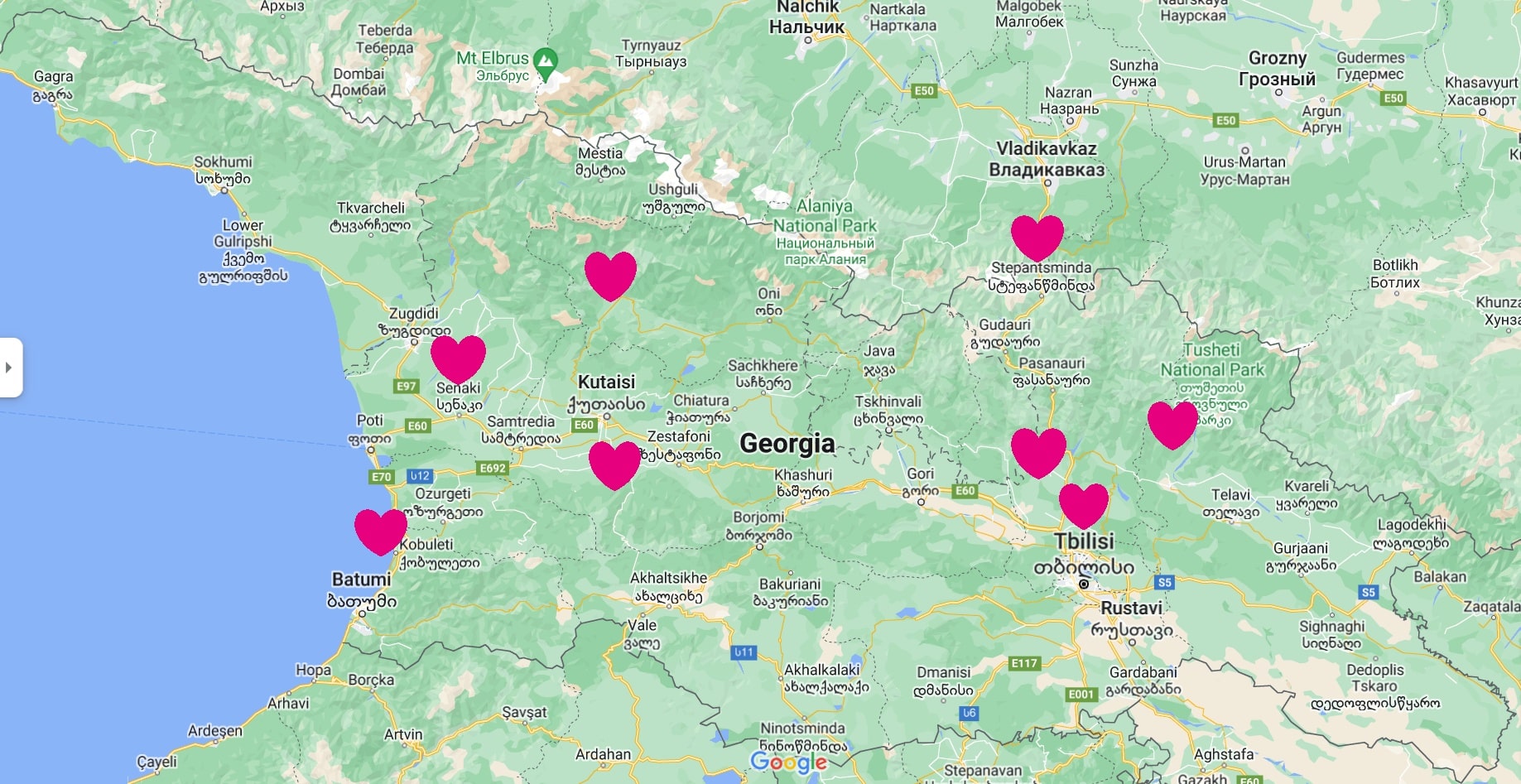
In this article, we highlight the role of Germany and #EU2020DE in the framework of the Eastern Partnership (EaP) with a focus on Georgia and our ongoing project #GEOYOUTH2020 – ‘Manifesto Engaging Youth in Politics in Georgia’, while discussing the role of funding for civil society cooperation to support democratisation processes in the region.

A Comment by AK Glück and Frauke Seebass

Weiterlesen …

Die europäische Automobilindustrie zwischen Rezession und Modernisierung

Mit dem europäischen Grünen Deal bekennt sich die EU zu den Pariser Klimazielen: Bis 2050 soll die Wirtschaft klimaneutral werden. Das bedeutet auch einen Wandel für die Automobilindustrie in Europa, die besonders wegen der vielen Arbeitsplätze einen wichtigen Stellenwert hat. Neben Elektroautos muss der öffentliche Personennahverkehr ausgebaut werden, damit Mobilität nachhaltig gestaltet wird.

Ein Beitrag von Luisa Maschlanka

Weiterlesen …