
POLIS PAPERS UND BRIEFS
- Alle
- connectingAsia
- Energie & Klima
- EUropa
- Europäische Union
- Frieden und Sicherheit
- Gender und Internationale Politik
- Gleichstellung
- Globale Fragen
- Migration
- PolisBrief
- PolisPaper
- Regiogruppe Rheinland
- Regiogruppen
- Regionale Schwerpunkte
Polis Paper N° 26 – War and Peace Across the Taiwan Strait. European Perspectives on Possible Geopolitical Escalation in the Indo-Pacific.
An armed conflict between China and Taiwan appears more likely than ever. This would have major implications for the EU. However, Europe still appears to be woefully unprepared for such an escalation. Tensions have risen in recent years over the status of the self-governed region, which calls itself the Republic of China but is considered by the People’s Republic of China an integral part of its own territory. US policymakers of all stripes seem convinced that an invasion of Taiwan would be “only the precursor” to further Chinese expansionism in the region. Regional actors, including Japan or the Philippines, seem to share the analysis to a certain extent, with Japan deeming the security of Taiwan as vital to its own national security. This paper argues that the EU and its member states need to increase preparedness in fields such as security, economic resilience and overall foresight efforts. Using existing leverage and attempting to manage tensions across the Taiwan Strait are key to navigate while still upholding the EU’s core values.
To answer these questions, Lara Franken and Lena Wittenfeld analyse Sweden’s experience with the abolition of FFP, and draw parallels to the current political developments in Germany. The authors then outline strategies and instruments to strengthen FFP’s resilience.
Polis Brief N° 32 – Feminist Foreign Policy at Risk? What are the Cases of Sweden and Germany Able to Teach Us and Where to Go from Here
As the last few weeks have shown, Germany will suffer the same fate as Sweden – the abolition of a feminist approach to foreign policy. What can Germany learn and take away from the Swedish case? Will feminist foreign policy (FFP) disappear completely if it no longer exists in name? And how can its resilience – understood as its ability to withstand changes of government, anti-democratic forces and other antagonistic forces – be strengthened?
To answer these questions, Lara Franken and Lena Wittenfeld analyse Sweden’s experience with the abolition of FFP, and draw parallels to the current political developments in Germany. The authors then outline strategies and instruments to strengthen FFP’s resilience.
Wirtschaftspolitische Zukunft Europas: Ein Blick auf die Wahlprogramme 2024
Die bevorstehende Europawahl stellt einen entscheidenden Moment für die politische Landschaft Europas dar. In einer Zeit, in der die Europäische Union mit zahlreichen Herausforderungen konfrontiert ist – vom russischen Angriffskrieg auf die Ukraine über den Klimawandel bis hin zu geopolitischen Spannungen – ist die wirtschaftspolitische Ausrichtung der verschiedenen Parteien von besonderer Bedeutung. Die Wahlprogramme der … Weiterlesen …
Polis180 Wahlprogrammcheck Europawahl 2024
Angesichts aktueller Herausforderungen wie des Klimawandels, des zunehmenden Rechtsrucks sowie geopolitischer Spannungen und Konflikte ist es entscheidend, ein gestärktes und zukunftsfähiges Europa zu schaffen. Die bevorstehende Europawahl bietet den Bürger*innen die Möglichkeit, durch ihre Stimmen Prioritäten für die Zukunft Europas zu setzen und so die Richtung der Europäischen Union (EU) und ihrer Politik für die … Weiterlesen …
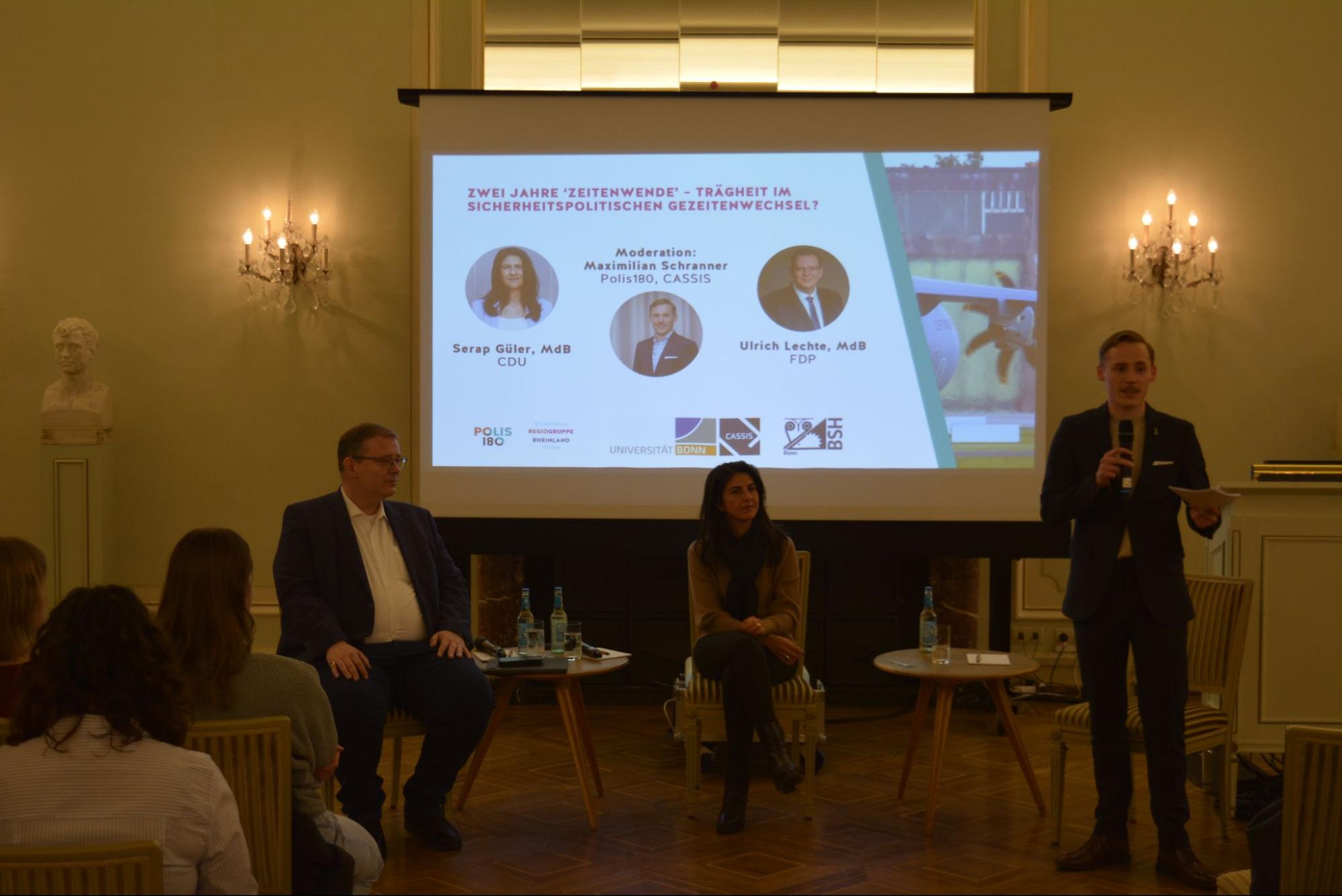
Veranstaltungsbericht: Zwei Jahre Zeitenwende – 10 Jahre Krieg in der Ukraine
Unter diesem Titel haben die Polis 180 Regiogruppe Rheinland, das CASSIS der Universität Bonn und die Bonner Hochschulgruppe für Außen- und Sicherheitspolitik (BHAS) gemeinsam mit Serap Güler (CDU) und Ulrich Lechte (FDP) diskutiert. Die Veranstaltung wurde von Maximilian Schranner moderiert. von Frederik Schmitz und Thorsten Gerwin Zwei Jahre nach der Verkündung der “Zeitenwende” … Weiterlesen …
Polis Brief N° 31 – Human Trafficking in Europe: An Equal Risk for all Refugees?
The forced displacement caused by war and regional conflicts forces large populations to seek safety through migration, but this pursuit often exposes asylum seekers to risks of violence, exploitation, and human trafficking. Border control policies, irregular migration paths, poor conditions in refugee centers, and legal complexities within the European Union compound the problem, disproportionately affecting … Weiterlesen …

nEUrds Newsletter – Your Guide To What’s Moving The Bubble: 5th Edition
Written By Lukas Seelig (LS), edited by Moritz Pohl (MP) coming to you from Polis180’s “European Economic Policy” programme inviting you to subscribe for free by dropping us a line here or an Instagram-DM here. Hey there, curious minds and all-around Brussels enthusiasts! Welcome back to the latest edition of our nEUrds newsletter, … Weiterlesen …
Polis Paper N° 25 – Brücken zwischen IST und SOLL – Kritik und Empfehlungen für Deutschlands Digitalstrategie aus feministisch-intersektionaler Perspektive
Im August 2022 veröffentlichte die deutsche Bundesregierung ihre ressortübergreifende Digitalstrategie mit dem Versprechen, Ungerechtigkeiten im digitalen Zeitalter anzugehen. Ein Jahr später fehlt es an konkreten Fortschritten, die festgehaltenen Maßnahmen bleiben unzureichend. Wie können wir die digitale Zukunft gerechter und nachhaltiger gestalten? Dieses Paper betrachtet die Strategie aus einer feministisch-intersektionalen Perspektive, identifiziert die inhaltlichen Schwächen und … Weiterlesen …
nEUrds Newsletter – Your Guide To What’s Moving The Bubble: 4th Edition
Written By Lukas Seelig, Janik Gast and Moritz Pohl coming to you from Polis180’s “European Economic Policy” programme inviting you to subscribe for free by dropping us a line here! Hello there and welcome back, curious minds and all-around Brussels enthusiasts! Welcome back to the latest edition of our nEUrds newsletter, where we … Weiterlesen …

Boxers in the Baltics – The Case for “Mittlere Kräfte” in the Paradigm of Territorial Defence
A conventional wisdom states that “generals are always prepared to fight the last war”. With very little media attention, the Bundeswehr announced arguably the most significant organisational changes since the end of conscription. This article is going to explore the introduction of the “Mittlere Kräfte” in the context of the changing security environment of the … Weiterlesen …
nEUrds Newsletter – Your Guide To What’s Moving The Bubble: 3rd Edition
Written By Lukas Seelig, Janik Gast and Moritz Pohl coming to you from Polis180’s “European Economic Policy” programme inviting you to subscribe for free by dropping us a line here! Hello there and welcome back, curious minds and all-around Brussels enthusiasts! As we embark on another whirlwind year, 2024 is already shaping up … Weiterlesen …
Report | Bonn Vision Lab – Envisioning Zeitenwende
The „Bonn Vision Lab 2030: Envisioning Zeitenwende“ brought together over 30 young academics and practitioners from across Europe to discuss the future security policy of Europe and Germany. Focused on cultivating a new generation motivated to take on responsibility and guided by a visioning approach, the workshop delved into discussions on foreign and security policy … Weiterlesen …
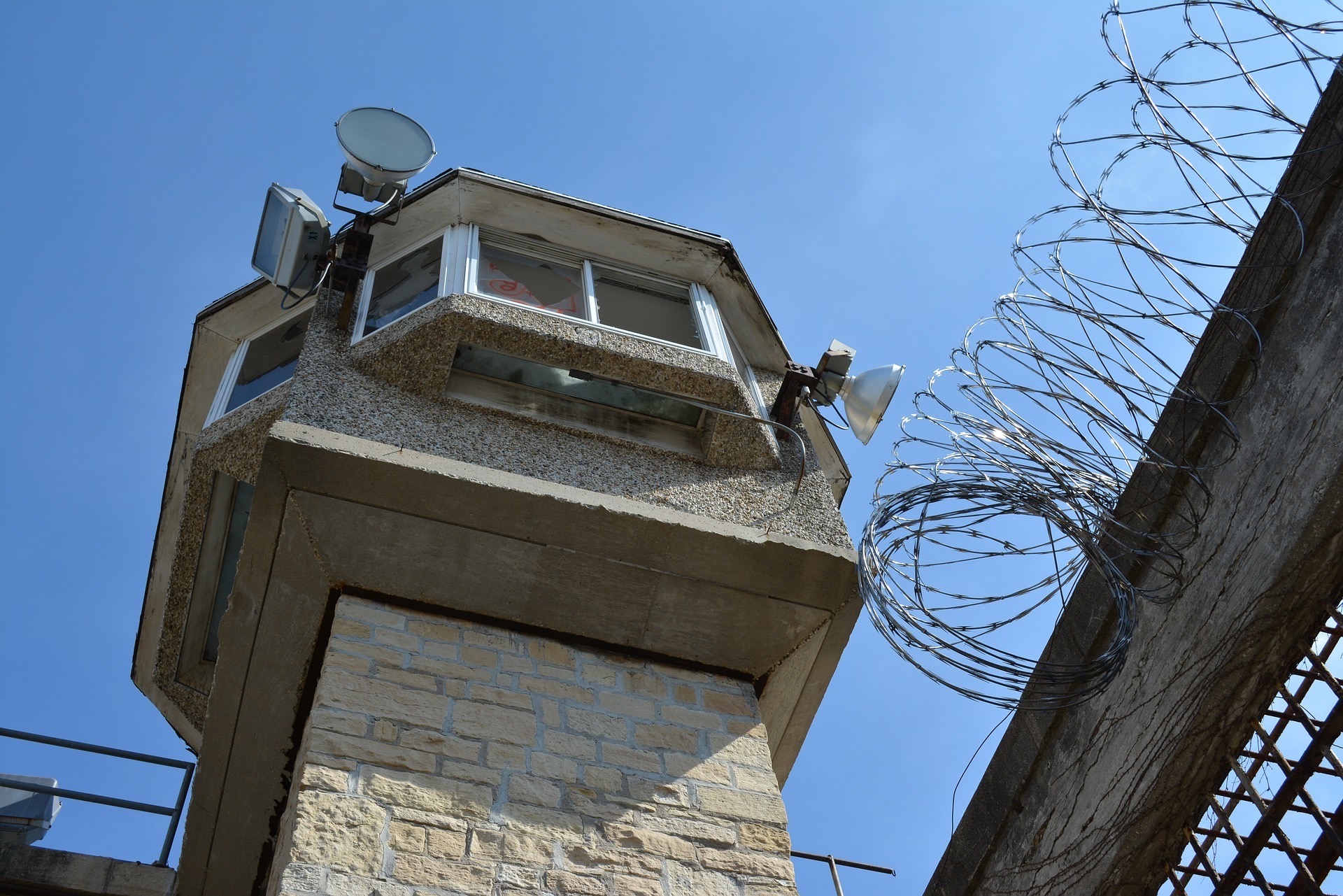
Geflohen, Kriminalisiert, Inhaftiert: Wie durch Kriminalisierung von Geflüchteten in der EU systematisch Menschenrechte verletzt werden
In einer Welt, geprägt von Menschenrechtskrisen, deren Ursachen und Folgen oft grenzüberschreitend sind, nimmt auch die Kriminalisierung von Flucht und Migration alarmierende Ausmaße an, wie eine Studie aus dem Jahr 2023 belegt. Diese zeigt, dass eine erhebliche Anzahl von Asylsuchenden mit gravierenden rechtlichen Problemen sowie grundlegenden Menschenrechtsverletzungen konfrontiert ist, wie beispielsweise willkürlichen Festnahmen, kaum Zugang … Weiterlesen …
Polis Brief N° 30 – Unlocking a Just Energy Transition Partnership between the G7 and India
11.12.2023 by Annika Würfel, Charlotte Liebrecht, Lukas Seelig, Tim Paul Broszio, Jan Osenberg A Just Energy Transition Partnership (JETP) between the G7 countries and India can contribute to empowering India to reduce its CO2 emissions from power production while increasing social welfare. Similar agreements have been reached with South Africa (with G7 countries committing … Weiterlesen …
Polis Brief N° 29 – Development cooperation of the future: A critical look at what could change by 2030
29.11.2023 by Sara Daub, Ilona Koch, Anastasia Rentzing Development cooperation and related policies remain subjects of continuous review and debate. The concept is defined as cooperation between countries, international organisations and non-governmental organisations to support the economic, social and political development of less developed or vulnerable regions and countries. Further dialogue is imperative … Weiterlesen …

Taiwan hat die Wahl (2): Die Kuomintang in Vergangenheit und Gegenwart
29.11.2023 von Carla Zappen Historischer Hintergrund der KMT Unter den politischen Parteien Taiwans blick die Kuomintang (國民黨) auf die längste Geschichte zurück. Wie auch von der Partei selbst gerne betont wird, hat die KMT ihren Ursprung bereits zur Zeit des sino-japanischen Kriegs (1894-1895). Damals gründete Sun Yat-sen (孫中山), der heute noch über die … Weiterlesen …