
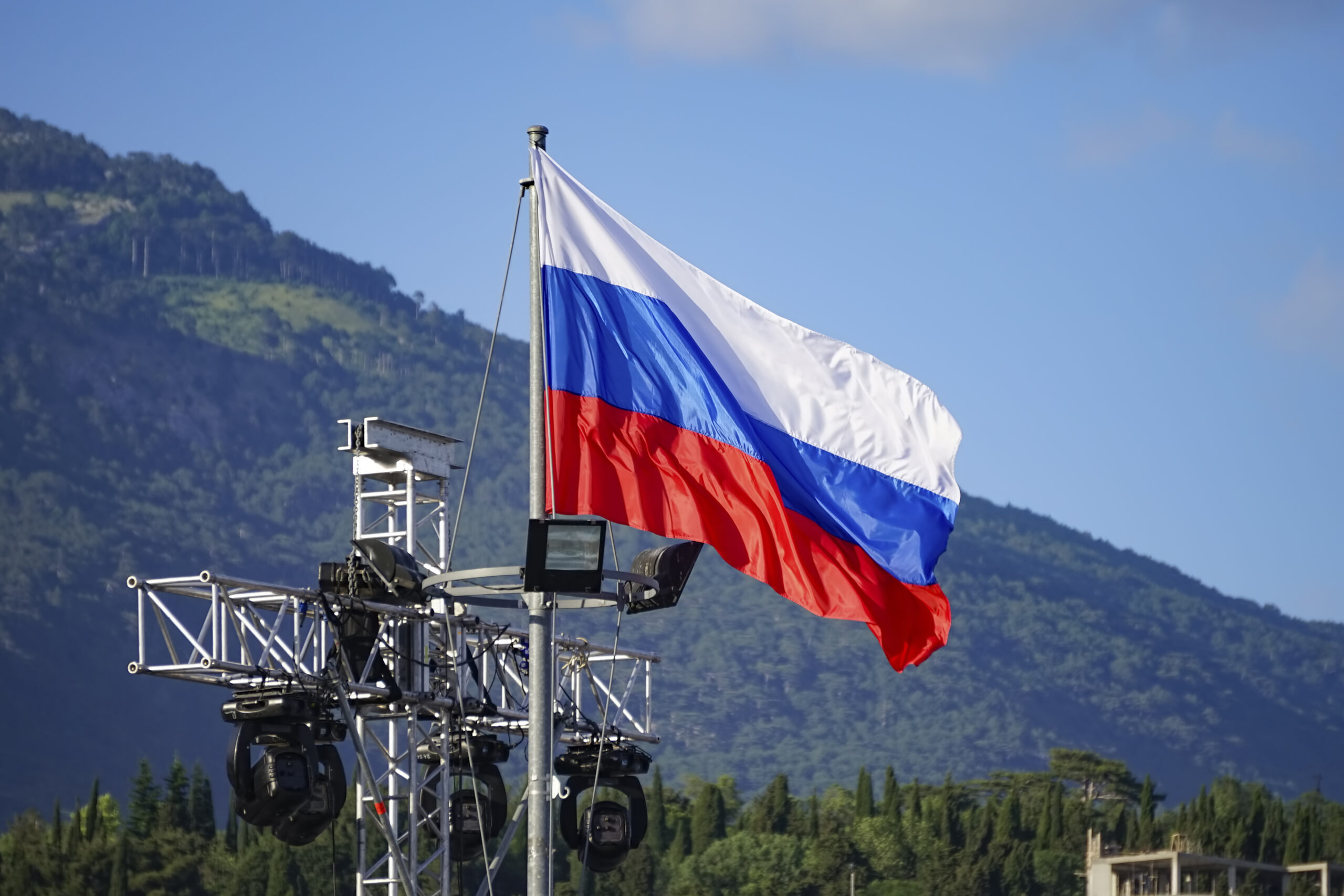
The popularization of far-right radical ideas among some migrant communities has become widespread in multiple countries across the West (and not only), the most popular example probably being the “Latinos for Trump” movement. Other examples are the Russian and Turkish communities in Germany. This is not a coincidence, as malign domestic and foreign actors have been using hybrid warfare tactics for years, trying to lower trust in democratic institutions and creating divisions across society. Migrants are one overlooked target of this hybrid warfare.
A blog post by Celine Cojocar
During last year’s presidential elections in Romania I suddenly became aware of the growing resentment of Romanians at home toward those members of the diaspora who cast their ballots for the far-right, conspirationist candidate Călin Georgescu (that is, if they did not vote for him themselves). In the months that followed, I observed genuine incomprehension as many could not grasp how those that have benefited from globalization to find a better future in another country, could be so misled as to vote for a man who went on TikTok promoting highly nationalist views in addition to claiming that the pyramids don’t exist and that he had met with an alien.
While we are quick to point towards Romanian exceptionalism (with contempt for the diaspora expressed through labels such as “strawberry pickers,” “slaves,” or “illiterates”), the popularization of far-right radical ideas among migrant communities has become widespread in multiple countries across the West (but not only), the most popular example probably being the “Latinos for Trump” movement. Other examples are the Russian and Turkish communities in Germany. This is not a coincidence, as malign domestic and foreign actors (mostly Russia) have been using hybrid warfare tactics for years, trying to lower trust in democratic institutions and create divisions across society for political gains. Migrants are one overlooked target of this hybrid warfare.
The Achilles Heel
The conditions of migration oftentimes create vulnerabilities that hostile actors can conveniently exploit. As mentioned in my first article on this topic, highly mobile populations such as seasonal workers often live in precarious socio-economic circumstances. This makes them particularly susceptible to a discourse appealing to their national pride restoring a sense of dignity they feel is denied in their everyday lives.
Additionally, for many migrants the instability of frequent or long-term mobility is compounded by separation from their family, heightening their reliance on digital communication and use of social media to maintain ties with loved ones back home. These platforms are not only a lifeline for maintaining personal ties but also a primary source of news, both about the country of origin and the country of arrival. Studies show that migrants, especially those of the second generation, move in multiple media worlds at once, allowing them to stay in touch with relatives as well as keeping up to date with daily life in the country they chose to migrate to.
The different media worlds fulfil different roles. The Turkish diaspora in Germany for instance assigns stronger social and emotional functions to Turkish television as opposed to German media, which are perceived as objective and dispassionate, but also as trustworthy. Media consumption therefore serves as a bridge to their home country, which is especially important to younger generations. Even though second-generation migrants have not moved countries themselves, experiences of racism or discrimination can intensify their need for identity affirmation and strengthen group ties within their community.
The Trojan Arrow
For a long time, the dominant assumption was that migrants would hold more progressive views than those who had not left, given their exposure to more liberal societies and the potential to act as agents of change. While this is true in some cases, migrants can also find themselves caught between two compounding spheres of disinformation: narratives circulating within their host society and those from their country of origin. This dual exposure can reinforce rather than weaken radical or conspiratorial beliefs, particularly as migrants tend to rely heavily on social media, sometimes even more so than non-migrants, as a primary source of information and connection. Additionally, evidence suggests that malign political actors spreading disinformation might circumvent fact-checking mechanisms by specifically targeting diaspora communities, especially if these communities lack fact-checking resources for their specific language.
The need for identity-affirmation and the search for connection in a foreign country makes migrant communities vulnerable to this targeted influence. Narratives spread by far-right actors and foreign malign powers deliberately tap into these sensitivities, not only by spreading disinformation about migrants, but also by addressing migrants as recipients of such messaging. By exploiting existing grievances and feelings of exclusion, these campaigns aim to erode trust in democratic institutions and deepen social divides, echoing classic strategies from the Russian hybrid warfare playbook. One of many examples illustrating how Russian disinformation weaponizes the notion of Russophobia to fuel anti-liberal and anti-Western narratives in Germany for instance is the false claim that the University Hospital of Munich refuses to treat Russian patients. Research shows how effective such false narratives are when they are combined with real grievances. Self-perceived discrimination does influence political behavior, with migrants who feel excluded showing a higher tendency to support authoritarian or radical parties in their countries of origin.
This does not mean that migrant communities are always inevitably promoting more radical, less informed views. In fact, a study on voting behavior across 22 European countries between 2001 and 2017 shows that second-generation migrants consistently support policies for redistribution, education, and social welfare, while not exhibiting strong party affiliation or rigid ideological belonging. This suggests that the constituency is more pragmatic and policy-oriented than ideologically driven, often swayed more by concrete policy proposals than by partisan loyalties.
However, when the reasons behind the diaspora’s political choices are not understood, these communities risk being treated as outcasts and subjected to insults portraying them as uneducated or disconnected, as the case of Romania shows. The challenge ahead is to move beyond stereotypes and scapegoating by designing policies that engage migrants as citizens with agency and address their grievances. Only then can they become true actors of change, rather than allowing them to become fault lines in the struggle over democracy.
Celine Cojocar has joined Polis180 in 2022, actively contributing to the Perspektive Ost Programme. She graduated with a Master in European Affairs from Sciences Po Paris and her research focuses on issues relevant to Eastern Europe, particularly Romania, including Diaspora policies, disinformation and artificial intelligence, migration issues as well as minority rights. Moreover, she is the co-founder of a film festival about the wars and post-conflict reconstruction in Ukraine, Bosnia, and Kosovo.
The Polis Blog serves as a platform at the disposal of ‘Polis180’s & ‘OpenTTN‘s members. Published comments express solely the ‘authors’ opinions and shall not be confounded with the opinions of the editors or of Polis180.
Image via Vecteezy
Zurück